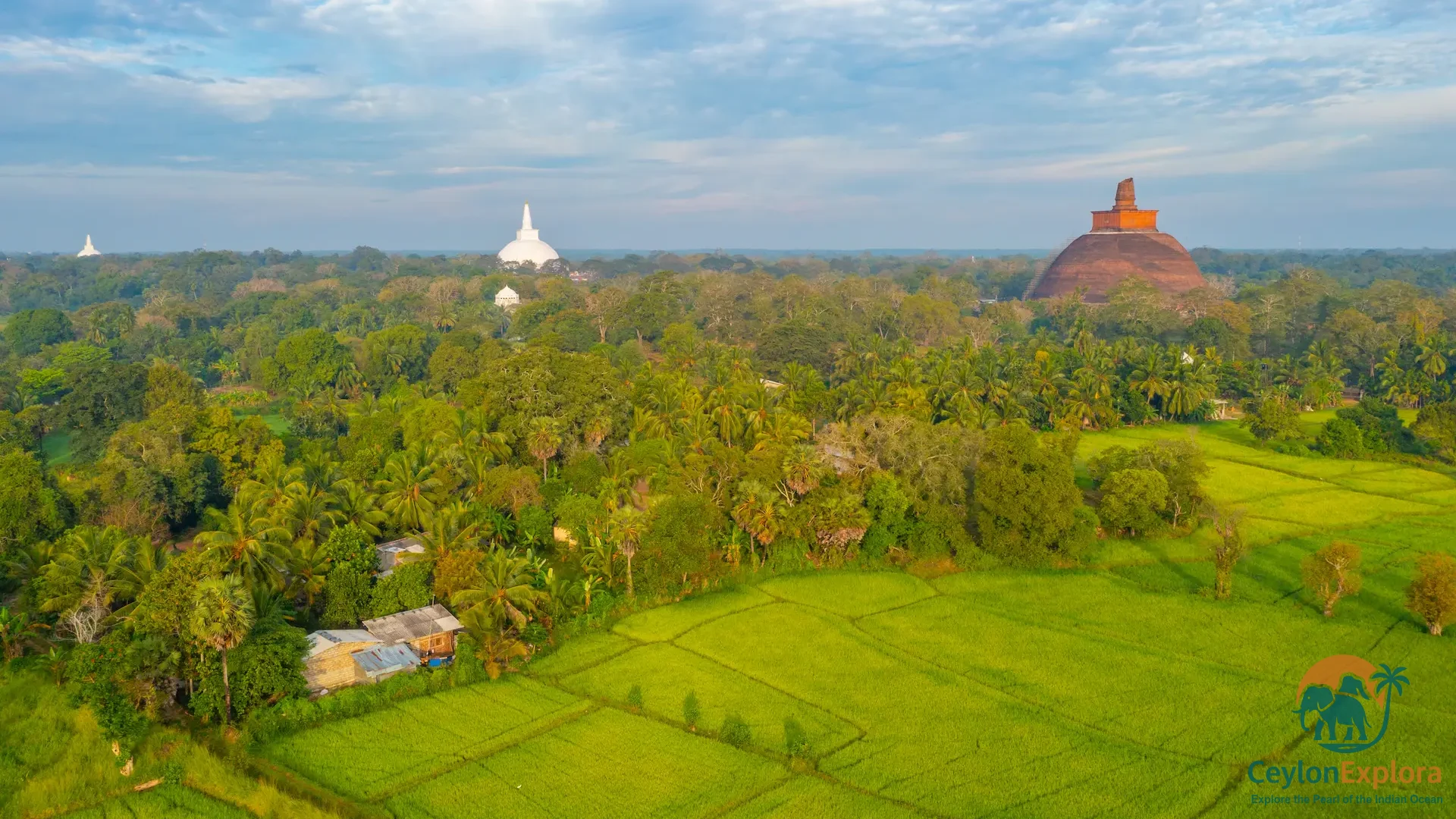

Why Anuradhapura Is Different from Sri Lanka's Other Ancient Sites
Most archaeological sites in Sri Lanka are visited primarily as tourist attractions. Anuradhapura is different: it remains an active place of religious practice. The Sri Maha Bodhi tree, the oldest documented living tree with a known planting date anywhere in the world, receives pilgrims from across South Asia every day of the year. The Ruwanwelisaya stupa draws worshippers who circle it barefoot, leaving offerings of frangipani flowers and burning incense at the base. You visit as a tourist alongside people who come to this place for reasons that predate tourism by two millennia.
This makes Anuradhapura a more layered experience than Sigiriya or Polonnaruwa. The ruins are less manicured, the atmosphere is less structured, and the combination of active religious observance and ancient archaeology is found nowhere else on the island at this scale.
Background: 2,400 Years of History in Brief
Anuradhapura was established as Sri Lanka's capital in 377 BC and served as the centre of political and religious power for over 1,300 years. It was one of the longest-functioning capitals in the ancient world. The city was defined by two things: Buddhism, which arrived from India under Emperor Ashoka's patronage in the 3rd century BC, and irrigation engineering, which allowed the dry northern plains to sustain a large population through a network of reservoirs and canals.
In 993 AD, the Chola king Rajaraja I of South India sacked the city. The capital moved south to Polonnaruwa and Anuradhapura was slowly reclaimed by jungle over the following centuries. British colonial archaeologists began formal excavation in the late 19th century, revealing the scale of what had been buried. UNESCO listed it as a World Heritage Site in 1982.
Practical Information
Entry fee: USD 30 for foreign adults, USD 15 for children aged 6-12, as of Sep 2026 (CCF's own live price table, one combined ticket for the whole sacred city; verify at ccf.gov.lk/ticket-issuance, as the table updates regularly)
Best way to explore: Bicycle. The main sites are spread across several kilometres; walking covers only a fraction of the sacred city in a day. Bicycles are available for hire near the Sri Maha Bodhi and at several guesthouses in town for around LKR 200 to 400 ($0.60 to $1.30) per hour
Time needed: Two half-days is the recommended minimum. One full day covers the main sites at a reasonable pace
Dress code: White clothing is worn by Sri Lankan Buddhist pilgrims at Anuradhapura. As a visitor, you do not need to wear white, but shoulders and knees must be covered at the Sri Maha Bodhi and at the active temple sites. Remove shoes before entering any temple or shrine area
Best time to visit: Early morning (by 7am at the Sri Maha Bodhi) to see the puja ceremonies before the mid-morning pilgrim crowds. The full moon day (poya) each month brings very large crowds; plan around these dates if you want a quieter visit
The Sri Maha Bodhi Tree

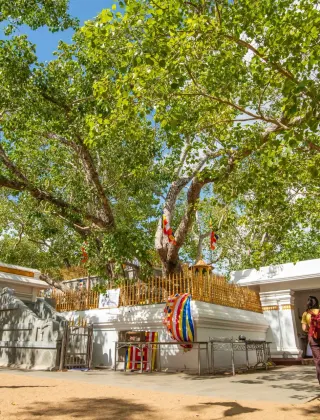
The Sri Maha Bodhi is the most sacred Buddhist site in Anuradhapura. It was grown from a cutting of the original Bodhi tree in Bodh Gaya, India, under which the Buddha attained enlightenment. The cutting was brought to Sri Lanka in the 3rd century BC by the nun Sanghamitta, daughter of Emperor Ashoka of India. The tree has been tended continuously since then, a span of over 2,200 years, making it the oldest documented living tree with a verified planting date anywhere in the world.
The tree sits within a walled enclosure in the sacred precinct. You approach barefoot, through a series of gates with increasing levels of sanctity. The inner courtyard holds the tree on a raised gold-railed platform; pilgrims circumambulate it, leaving offerings and sitting in meditation or prayer. The atmosphere is calm and genuinely devotional.
Photography is permitted in the outer areas. Inside the inner enclosure, check for posted restrictions before photographing; these vary by day and by pilgrim volume. Never photograph monks without permission, and never position yourself between a monk and the tree while they are in prayer.
Ruwanwelisaya Stupa

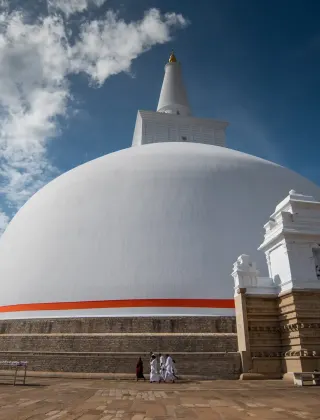
The Ruwanwelisaya, built by King Dutugamunu in the 2nd century BC, stands 103 metres high and has a circumference at the base of approximately 290 metres. It is listed among the sixteen most sacred sites (solosmasthana) in Sri Lankan Theravada Buddhist tradition. The current white dome is a restoration of the original structure, which was heavily damaged over the centuries of jungle growth.
The surrounding courtyard is where most worshippers spend their time: circumambulating the stupa clockwise, which is the standard form of Buddhist devotional practice. The elephant wall that encircles the base, rows of stone elephants carved in relief, is a distinctive feature not seen at other Sri Lankan stupas. The interior of the relic chamber is not accessible to visitors.
Arrive before 8am or after 4pm for the best light for photography and a less crowded courtyard.
Jetavanaramaya Stupa
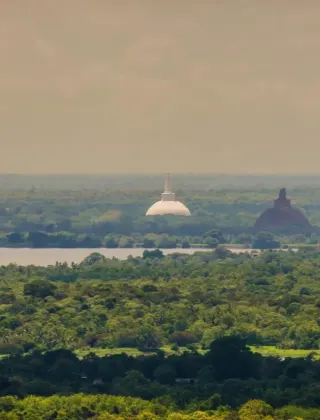
The Jetavanaramaya was built by King Mahasena in the 3rd century AD and originally stood approximately 122 metres high, making it one of the tallest structures in the ancient world at the time of construction. It required approximately 93 million fired bricks, said to be more fired-brick volume than any other ancient structure outside Egypt. The stupa is not fully restored and the current overgrown red-brick dome gives a raw sense of the site's scale that the white-plastered Ruwanwelisaya does not. The museum building adjacent to the stupa contains some of the best artefacts recovered from the site.
Thuparama Dagoba
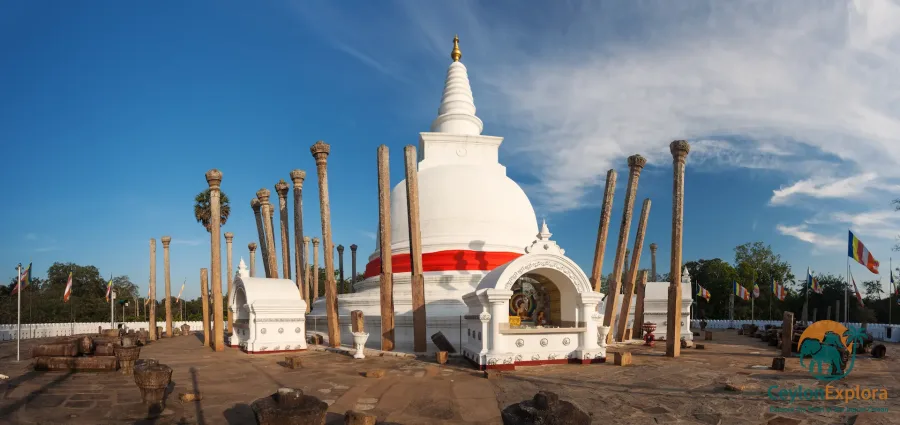
The Thuparama is the oldest stupa in Sri Lanka, built in the 3rd century BC by King Devanampiya Tissa following the arrival of Buddhism on the island. It is believed to contain the right collarbone of the Buddha, one of the most significant relics brought to Sri Lanka from India. The stupa is much smaller than the Ruwanwelisaya or Jetavanaramaya (a height of about 19 metres), but its age and the significance of the relic it is said to house make it the most historically important of the three.
The Thuparama is surrounded by a circle of slender monolithic pillars, thought to have originally supported a wooden vatadage (circular shrine house). The pillars are a distinctive and photogenic feature.
The Samadhi Statue
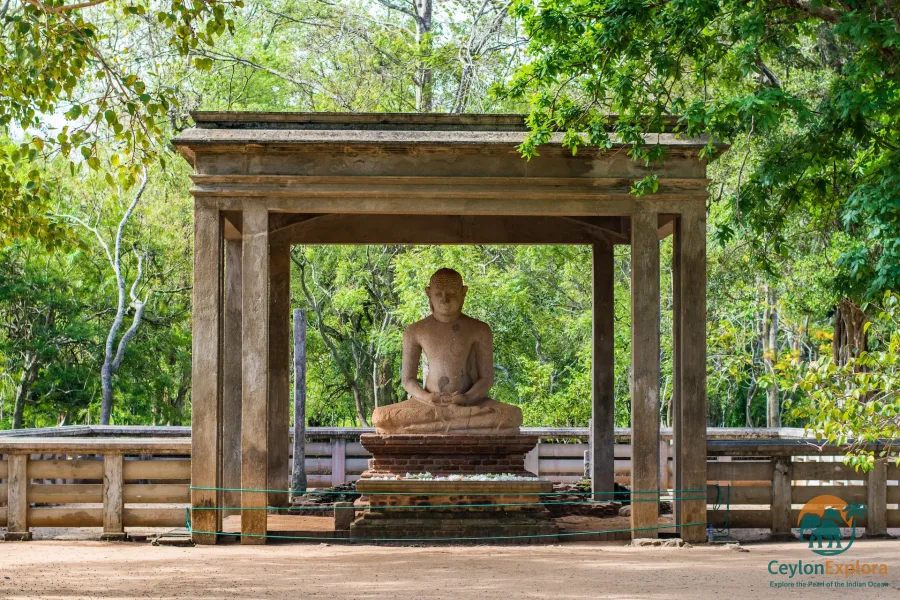
The Samadhi Buddha statue dates to the 4th century AD and depicts the Buddha in a seated meditation posture (samadhi). It is carved from dolomite marble and stands approximately 2.2 metres high. Despite its relatively contained size, it is considered one of the finest examples of ancient Sri Lankan sculpture. The Indian independence leader Jawaharlal Nehru reportedly kept a photograph of it in his prison cell during his imprisonment by the British colonial government.
The Abhayagiri Monastery Complex

The Abhayagiri was one of the largest Buddhist monastery complexes in ancient Asia, reportedly housing up to 5,000 monks at its peak. The remains cover a large area north of the main sacred city and include the partially restored Abhayagiri stupa (75 metres high), the Ratnaprasada (Gem Palace), and several meditation pools. The moonstone carvings at the entrance to some of the shrine rooms are among the finest examples of ancient Sinhalese decorative stonework, with concentric semicircular bands of elephants, horses, lions, and geese.
Bicycle Route Through the Sacred City
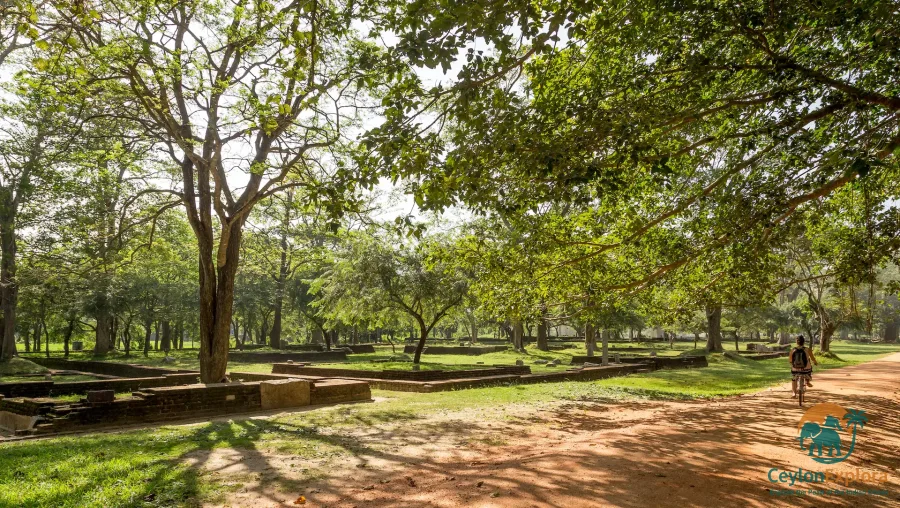
A practical bicycle loop covering the main sites takes 4 to 6 hours and runs roughly north to south through the sacred precinct:
Start at the Sri Maha Bodhi (open early; complete before crowds arrive)
Ruwanwelisaya stupa (10 minutes' cycle north)
Thuparama dagoba (5 minutes further north)
Abhayagiri complex (continue north, 15 to 20 minutes)
Jetavanaramaya and museum (south from Abhayagiri, 20 minutes)
Samadhi statue (5 minutes from Jetavanaramaya)
Return south to town or guesthouse
The roads within the sacred city are paved and generally flat. The main hazard is tuk-tuks and tour buses on the access roads; cycle on the edges. Signage is adequate for navigation but a hand-drawn map from your guesthouse helps between sites.
Meditation and Pilgrimage Opportunities
Several monasteries and meditation centres in and around Anuradhapura accept short-stay meditators and retreat visitors. The Forest Hermitage at Kanduboda (near Colombo) and the Mitirigala Nissarana Vanaya monastery (two hours south of Anuradhapura) are both respected centres for serious meditators. Anuradhapura itself is a place where sitting quietly near the Ruwanwelisaya or in the gardens of the Sri Maha Bodhi is a natural and acceptable thing to do.
Getting to Anuradhapura
From Colombo: 4 to 5 hours by private car via the A9 highway. Trains from Colombo Fort to Anuradhapura run several times daily (approximately 4 to 5 hours). Check schedules at railway.gov.lk and book seats at seatreservation.railway.gov.lk For real-time train tracking and delay updates, the RDMNS app (rdmns.lk) is a widely used community tool.
From Negombo (near the airport): 3 hours by private car
From Sigiriya: 2 hours by private car
From Kandy: 4 hours by private car
Anuradhapura town is a functional mid-size city with decent guesthouses and a few mid-range hotels. Budget accommodation near the sacred precinct allows an easy walk or short bicycle ride to the main sites each morning.
Cultural Triangle Combination
Anuradhapura pairs well with Wilpattu National Park (50 kilometres west), which is Sri Lanka's largest national park and offers leopard and elephant safaris with significantly fewer visitors than Yala. A two-night Anuradhapura stop can include one full day at the sacred city and one morning safari at Wilpattu.
If you want the full Cultural Triangle route (Anuradhapura, Sigiriya, Polonnaruwa, Dambulla, Kandy), the team at CeylonExplora can arrange a private car with an experienced driver and local guides at each site. Contact us to plan the route.

From Fellow Travellers
Comments
No comments yet
Been here, or planning your own trip? Share your experience below and help the next traveller.
Leave a Comment
Comments are reviewed before publishing. No links, please. Email is optional and never shown.