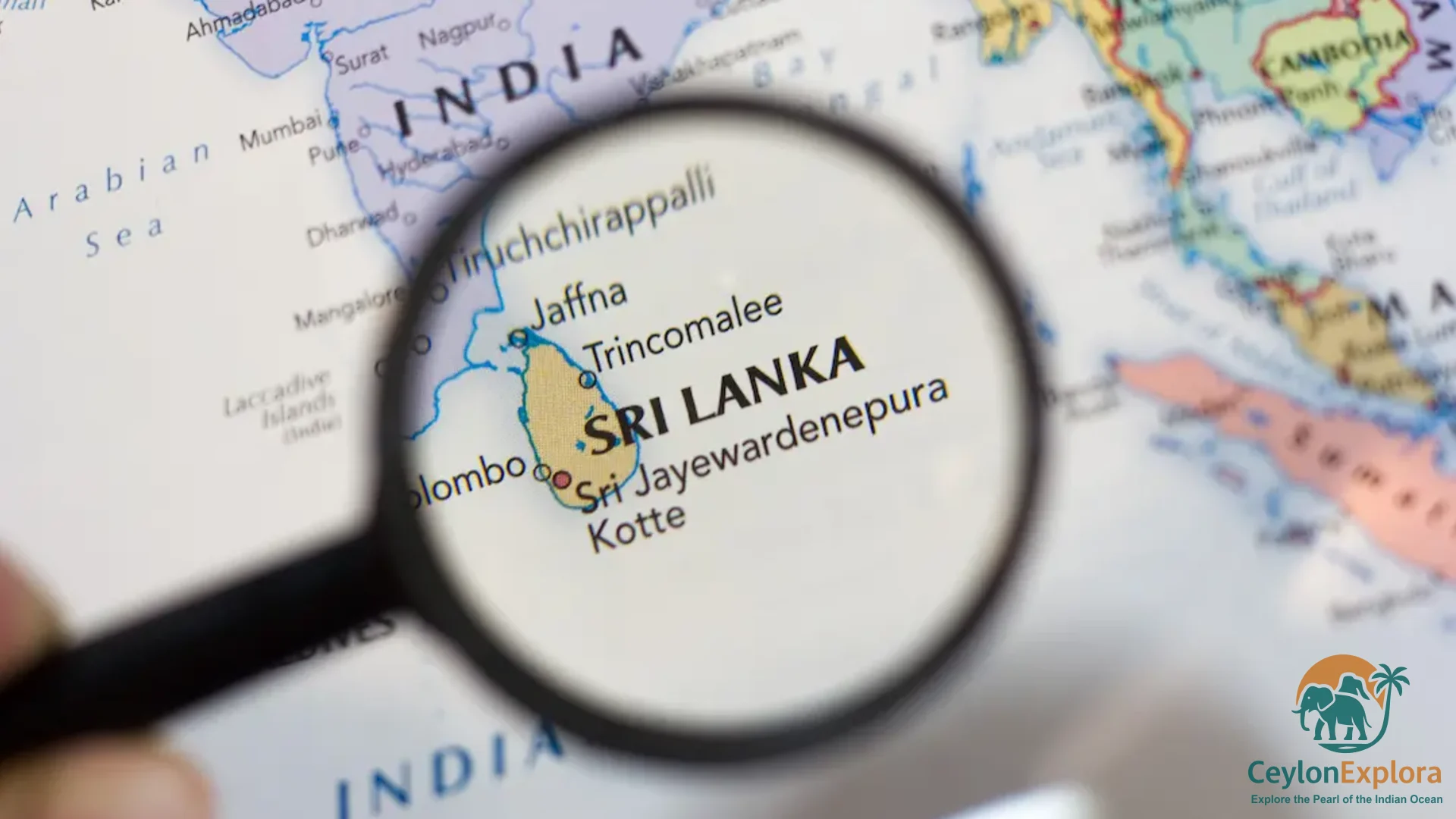

What This Guide Covers
The island is compact, roughly the size of Ireland, but it has two monsoon systems, three distinct climate zones, a functional rail network, and a set of cultural customs worth knowing before you arrive. This guide covers the practical side: when to go, how to get in, how to move around, and the basics that make travel here smoother.
When to Visit: Sri Lanka Has Two Seasons Running at Once
The single most useful thing to understand about Sri Lanka's weather: when one coast is wet, the other is almost always dry. Two monsoons govern the calendar, and once you understand them, you can find good conditions here any month of the year.
The Southwest Monsoon (May to September)
This monsoon hits the west and south coasts hardest, bringing heavy rain to Colombo, Galle, and Mirissa from around May through September. During these months, the east coast (Trincomalee, Arugam Bay, Pasikudah) is at its best: calm seas, clear skies, and far fewer visitors than the western circuit. The hill country around Kandy and Ella also tends to be drier from February to April, just before this monsoon arrives.
The Northeast Monsoon (October to January)
From October through January, the northeast monsoon brings rain to the north and east while the south and west stay dry and sunny. This is peak season for Galle, Mirissa, Unawatuna, Hikkaduwa, and Colombo. December to March is the most popular travel window overall, with reliable road conditions and calm seas on the southwest coast.
Regional Summary
South and West Coasts (Galle, Mirissa, Colombo): Best from December to April
East Coast (Trincomalee, Arugam Bay, Pasikudah): Best from May to September
Hill Country (Kandy, Nuwara Eliya, Ella): February to April gives the clearest skies for hiking
Cultural Triangle (Sigiriya, Anuradhapura, Polonnaruwa): December to April is cooler and less humid
Year-round touring: A north-to-south or east-to-west route can always work around the rain if planned around the weather calendar
There is no universally bad month to visit Sri Lanka, but there is usually a wrong region to target at the wrong time. Build your itinerary around the weather map, not just the dates.
Visa and Entry Requirements
Most visitors need an Electronic Travel Authorization (ETA) before flying to Sri Lanka. Apply online at the official government portal, eta.gov.lk, before departure. Avoid third-party websites that charge inflated fees for the same approval.
Cost: The standard fee is approximately USD 20 - 50 for a single-entry tourist visa, though Sri Lanka has periodically changed or waived fees as part of tourism drives. Confirm the current amount at eta.gov.lk before applying
Processing time: Usually 24 to 72 hours; approval arrives by email
Validity: 6 months from date of issue, with a stay of up to 30 days on arrival
Extensions: You can extend your stay through the Department of Immigration in Colombo up to a total of 270 days
Free ETA countries: Citizens of China, India, Russia, Indonesia, Thailand, and several other nations currently receive free ETAs. Check eta.gov.lk for the current list, as it changes
On arrival: On-arrival ETA processing is available, but applying online before you fly is faster and avoids queues at the airport
Apply at least three days before departure. Keep your approval email on your phone or printed for the immigration desk.
Currency and Money
The currency is the Sri Lankan Rupee (LKR). As of mid-2026, one US dollar buys roughly 300 to 330 LKR, though the rate shifts. Check XE.com or Google for the live rate on your travel day.
Getting Cash
ATMs are easy to find in Colombo, Kandy, Galle, and most main tourist towns. In smaller villages and around national parks, they become rare. Withdraw enough cash before heading into the hill country or remote areas.
Most ATMs accept Visa and Mastercard; Cirrus and Plus networks also work at many machines
ATM fees typically run 300 to 800 LKR per withdrawal (roughly $1 to $2.50), depending on the bank and location, plus whatever your home bank charges
Withdraw larger amounts less often to keep fees low
Exchanging Money
The exchange counters at Bandaranaike International Airport operate 24/7 and offer fair rates. Licensed banks like Sampath, Commercial Bank, and HNB are reliable in town. Avoid exchanging money on the street.
Cash vs. Card
Cards work at mid-range and upscale hotels, restaurants, and some souvenir shops. In markets, guesthouses, tuk-tuks, and roadside food stalls, cash is the only option. Carry LKR notes at all times. Small notes (20, 50, 100 LKR) are useful for local transport and small purchases.
Tipping
Tipping is not required but is appreciated. A reasonable guide: 100 to 200 LKR at restaurants, $5 to $10 per day for a private driver or guide. At hotels, 500 LKR for luggage assistance is standard.
Getting Around the Island
Sri Lanka has more transport options than most first-timers expect. For touring the island, a private car with driver is how most visitors get around: your driver handles navigation, waits at each site, and breaks up long days with stops you would not find on your own. Century-old rail lines through the mountains and cheap buses reaching every corner remain useful for single hops or for travellers on a tight budget.
Private Driver
For groups of two to four people, a private car with driver is the practical way to tour the country. A full day runs $40 to $60 USD. Your driver handles navigation, waits at each site, and can recommend stops you would not find on your own. CeylonExplora arranges private vehicles with experienced drivers; contact us if you want this confirmed before arrival.
Trains
The Kandy to Ella route is six hours through tea estates, cloud forest, and nine mountain tunnels, and it is a scenic ride worth planning around if you have the time. Book first or second class seats well in advance: during peak season (December to April), tickets for this route sell out 30 to 60 days ahead, through the official website seatreservation.railway.gov.lk.
Fares: $3 to $10 USD depending on class and distance
Third class is inexpensive but standing-room only on busy trains
The observation car on hill country trains is open-air and popular with photographers
Note: as of early 2026, the hill country section (Kandy to Badulla via Ella) is suspended following track damage from Cyclone Ditwah. Verify current service status at railway.gov.lk before planning this route.
Buses
Buses reach almost everywhere, including towns the rail network does not serve, and they are the least expensive way to get around: short trips cost under $1, long-distance routes run $2 to $5. Air-conditioned intercity express buses run on fixed timetables between major cities for longer journeys.
Tuk-Tuks
Three-wheelers handle short trips within towns. Always agree on a price before you get in; coverage is thinner in smaller towns, so have cash ready as a fallback. A typical town hop costs $2 to $4.
Domestic Flights
FitsAir operates scheduled domestic flights between Colombo (Ratmalana), Jaffna, and Trincomalee. Check current routes and schedules directly with FitsAir before booking, as these change seasonally. For more flexibility, seaplane charters (Cinnamon Air) serve several resort areas and are a practical option for those willing to pay a premium.
Language Basics
Sri Lanka has two official languages: Sinhala and Tamil. English is widely understood in tourist areas, hotels, and among younger locals. In rural areas and smaller towns, a few Sinhala phrases make a real difference.
Ayubowan (ah-yoo-BOH-wan): "May you live long" — the traditional greeting, said with palms pressed together
Isthuthi (iss-TOO-thi): Thank you in Sinhala
Meeka kiyada? (MEE-kah kee-YAH-dah): "How much is this?" — useful at markets and when checking fares
Naha: No
Ow: Yes
A few words of Sinhala earn a noticeably warm response from locals. You do not need to master the language; making the effort is what counts.
Cultural Etiquette
Sri Lanka is a predominantly Buddhist country (around 70% of the population), with significant Hindu, Muslim, and Christian communities. A few practical rules keep you respectful across all of them.
At Temples and Religious Sites
Remove shoes before entering any temple or shrine: Buddhist temples, Hindu kovils, and mosques alike
Cover shoulders and knees. Carry a light sarong or scarf for impromptu visits
Do not pose for photos beside or in front of Buddha statues. Turning your back to a statue for a selfie is considered disrespectful and is now actively managed by staff at many sites
Leather items (belts, bags, wallets) are prohibited inside many Hindu kovils
Do not hand objects directly to a monk if you are a woman. Place items on a surface for them to pick up
General Etiquette
Use your right hand for giving and receiving money, food, or gifts
Public displays of affection between couples are frowned upon, particularly in rural and religious areas
A gentle diagonal head tilt, sometimes called the head wobble, usually means "yes," "understood," or "okay." It is different from the flat left-right head shake that signals no in Western cultures
Greet with Ayubowan and palms pressed together rather than a handshake, unless the other person extends their hand first
Photography
Ask before photographing people, particularly at religious ceremonies or in villages. Most people are happy to be photographed but appreciate being asked first. Camera fees apply at some major archaeological sites; check at the entrance.
Health Basics
No vaccinations are mandatory for entry, but travel health clinics typically recommend Hepatitis A and Typhoid for Sri Lanka. Malaria risk exists in parts of the northern and eastern provinces, though the risk in main tourist areas is low. Check the latest advice from your country's travel health authority before departure.
Travel insurance with medical evacuation cover is strongly recommended
Tap water is not safe to drink anywhere in Sri Lanka. Use sealed bottled water or a filtered water bottle
Be cautious with ice at budget street stalls; it may be made from unfiltered water
Pharmacies are widely available in cities and most towns. Basic medications are inexpensive
Staying Connected
Pick up a local SIM card at Bandaranaike International Airport immediately after clearing customs. Counters for Dialog and Mobitel operate 24 hours a day in the arrivals hall. You will need your passport to register. Both providers offer tourist SIM packages from around $5 to $7 USD, with 20 to 30 GB of data valid for 30 days.
Dialog has generally stronger coverage outside Colombo, particularly in the hill country and along the eastern coast. Mobitel is a close competitor and sometimes cheaper. Both offer eSIM options if you want to activate connectivity before landing.
Wi-Fi is available at most hotels and guesthouses, but local mobile data is cheap enough that relying on it for maps, PickMe, and messaging works well throughout the trip.
Quick-Reference Essentials
Capital: Sri Jayawardenepura Kotte (administrative); Colombo (commercial hub)
Main airport: Bandaranaike International Airport (CMB), 30 km north of Colombo near Negombo
Currency: Sri Lankan Rupee (LKR); 1 USD = approx. 300 to 330 LKR (mid-2025)
Visa: ETA required for most nationalities; apply at eta.gov.lk; approx. USD 20-50 (confirm current fee before applying)
Languages: Sinhala, Tamil, English widely used in tourism
Electricity: 230V / 50Hz; Type D and G plugs (bring a universal adapter)
Time zone: UTC+5:30 (Sri Lanka Standard Time; no daylight saving)
Emergency numbers: 119 (police), 1990 (ambulance)
Driving side: Left
Tap water: Not safe to drink. Use sealed bottled water or a filter. Avoid ice at budget street stalls
Ready to Build Your Itinerary?
Once you know the weather window and transport options for your dates, Sri Lanka is a straightforward country to plan. The practical side tends to look more complicated on paper than it is on the ground.
If you want an itinerary built around your specific travel dates, interests, and the weather window that works for your route, get in touch with the team at CeylonExplora. We will put together a plan that fits your timeline and travel style.
From Fellow Travellers
Comments
No comments yet
Been here, or planning your own trip? Share your experience below and help the next traveller.
Leave a Comment
Comments are reviewed before publishing. No links, please. Email is optional and never shown.