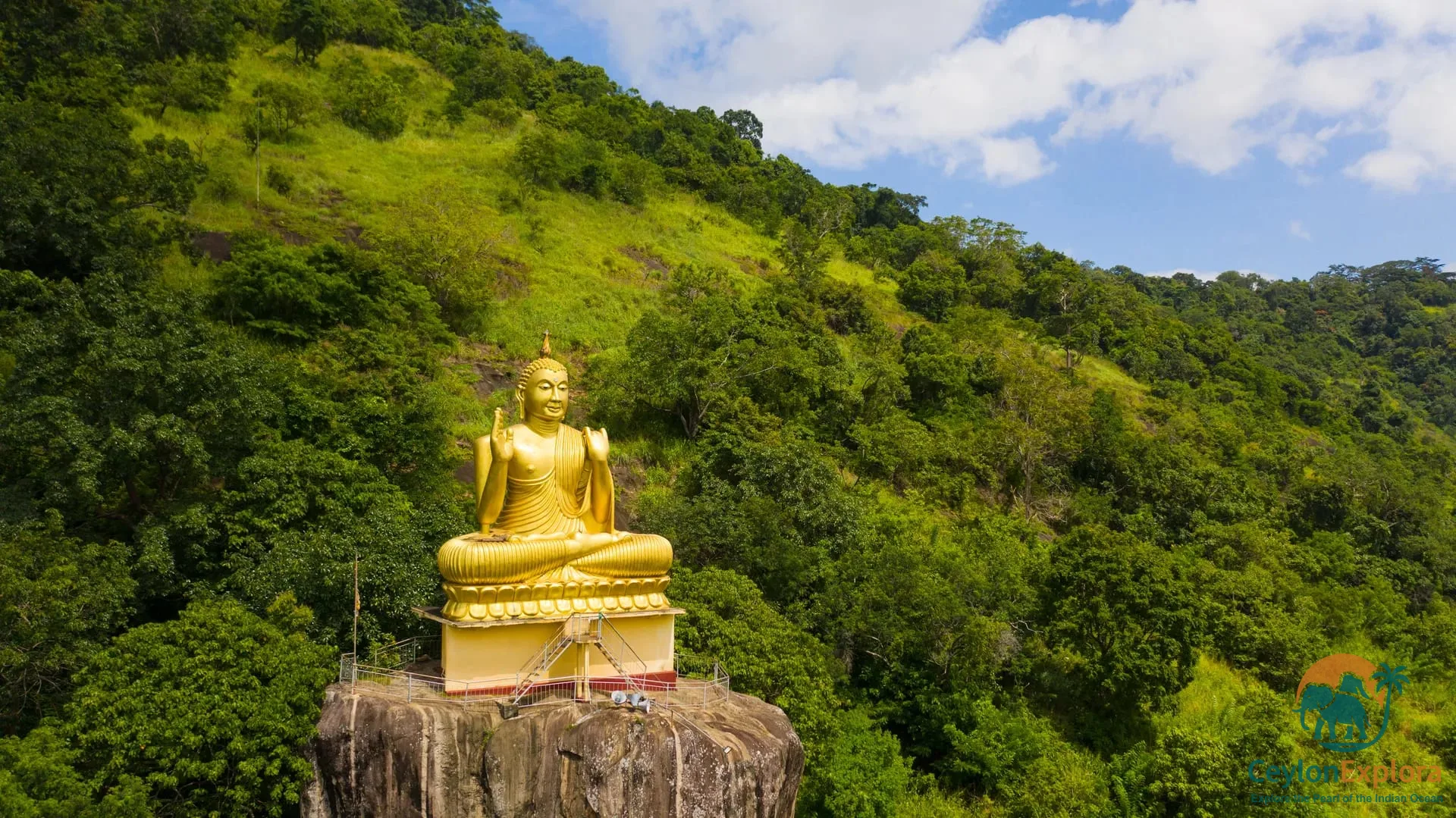
Aluviharaya Rock Cave Temple
A 1st-century BC rock cave monastery near Matale where the Tripitaka Buddhist scriptures were first committed to writing on ola palm leaves, with a restored complex of cave shrines.
Duration
45 minutes to 1 hour
Entry Fee
$1 USD
Difficulty
easy
Budget
budget
About Aluviharaya Rock Cave Temple
Aluviharaya (also Alu Vihara) is a Buddhist cave monastery at Matale, 30 kilometres north of Kandy on the A9 highway. The site is significant in Buddhist history as the location where, in approximately 30 BC, the Tripitaka (the complete canon of Theravada Buddhist scripture) was first written down on ola palm leaves during a council of 500 monks. Prior to that, the texts had been transmitted entirely by oral recitation. The cave complex includes a series of rock shelters and man-made caves housing reclining and seated Buddha statues, frescoes, and models of the Buddhist hell. The original manuscripts were destroyed during a colonial-period conflict but the work of transcription has been ongoing at the monastery since the 19th century. Monks still hand-write Buddhist texts at the site.
Highlights
- Site where the Tripitaka was first written in approximately 30 BC
- Ancient cave monastery on the Matale-Dambulla road
- Models of Buddhist hell realms in cave shrines
- Active monks engaged in ola leaf manuscript writing today
Practical Tips
Entry fee is approximately LKR 300 (USD 1) — confirm locally as this changes.
Ask at the monk's quarters to see the ola leaf manuscript writing — monks demonstrate this on request during daylight hours.
The site is directly on the Kandy-Dambulla A9 highway, making it an easy stop when travelling north from Kandy.
Dress modestly and remove shoes at the cave entrances.
Explore by Interest
Best Time to Visit
Best time of day: Year-round; stop en route between Kandy and Dambulla/Sigiriya
Location
Planning Info
- Crowd level
- Usually quiet
- Physical difficulty
- easy
- Setting
- mixed
- Child friendly
- Yes
- Senior friendly
- Yes
- Budget level
- budget
- Photography
- ★★★☆☆
Plan Your Visit
Want to include Aluviharaya Rock Cave Temple in your Sri Lanka itinerary? Our team builds personalised plans: no booking fees, no online payment.
ALSO IN THE AREA
Nearby Destinations
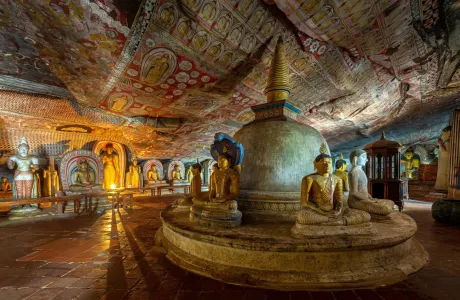
Dambulla Cave Temple
A UNESCO World Heritage Site consisting of 5 rock cave temples at 160m above the plain, containing 153 Buddha statues and 2,100 sq m of cave paintings dating from the 1st century BC.
Explore →
Sigiriya Rock Fortress
5th-century palace and fortress built atop a 200m granite monolith by King Kashyapa, a UNESCO World Heritage Site and the most visited paid attraction in Sri Lanka.
Explore →
Nalanda Gedige
A 7th-9th century stone shrine near Matale combining Hindu and Buddhist architectural styles, one of the few surviving examples of this fusion in Sri Lanka, relocated to its current site in the 1980s.
Explore →PLAN YOUR VISIT
Ready to explore Aluviharaya Rock Cave Temple?
Tell us your travel dates, group size, and preferences. Our team will build a personalised itinerary with accommodation, transport, and entry tickets: no booking fees, no online payment required.