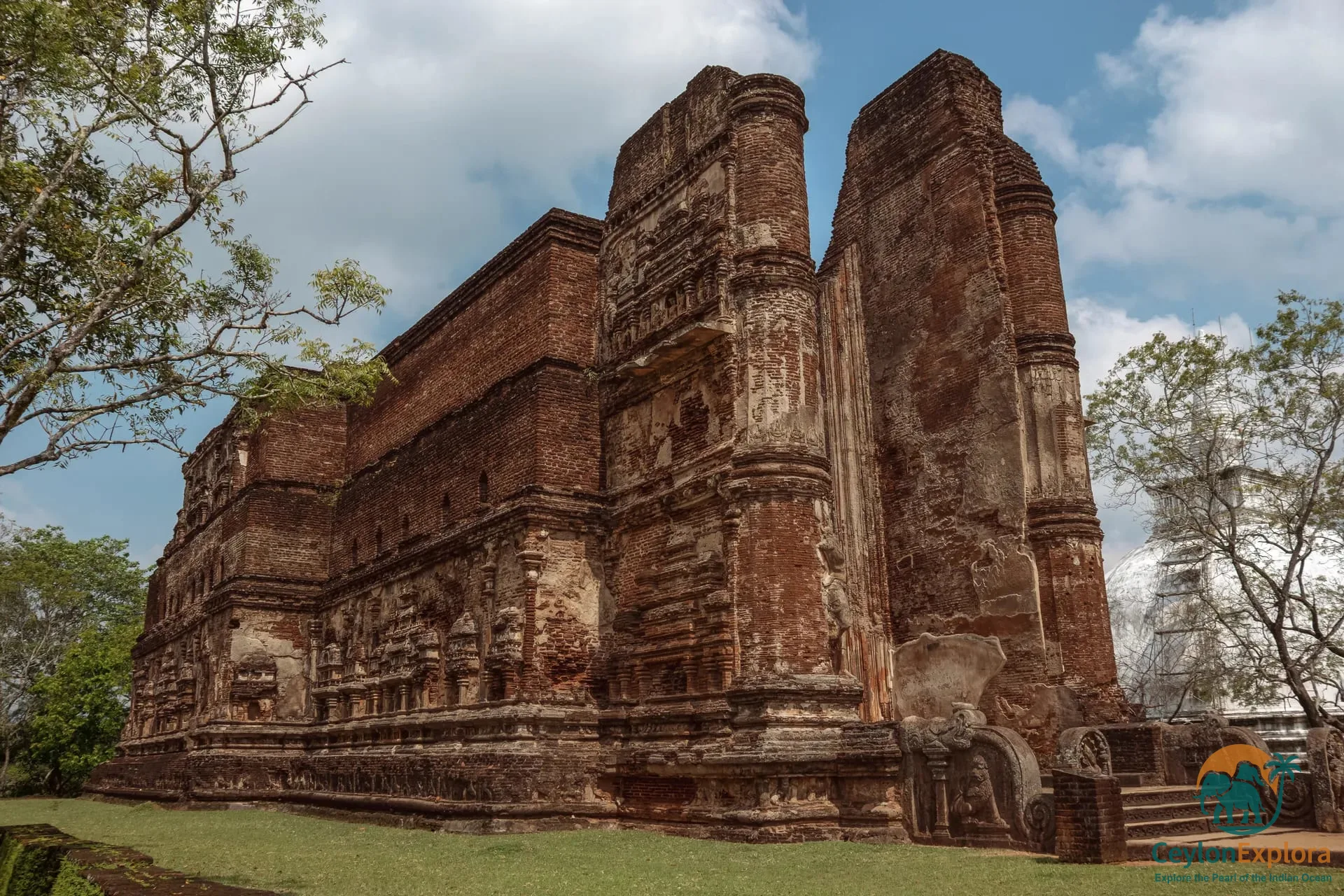
Lankatilaka Vihara Polonnaruwa
12th-century image house in Polonnaruwa with 17m tall walls, housing a giant headless standing Buddha figure above its ornate brick doorway.
Duration
30-45 minutes
Entry Fee
$30 USD
Difficulty
easy
Budget
moderate
About Lankatilaka Vihara Polonnaruwa
Lankatilaka is a 12th-century image house (gedige) built by King Parakramabahu I, and its brick walls rise to 17 metres, making it the tallest surviving structure in the Polonnaruwa archaeological park. The building once enclosed a colossal standing stucco Buddha figure, of which only the lower legs, torso, and ornate pedestal remain, the head and upper body having collapsed centuries ago. The doorway arch and flanking pilasters carry finely detailed decorative brickwork, and a series of blind window niches line the outer walls in a style influenced by South Indian temple architecture. The sheer scale of the ruin, with jungle pushing against its outer walls, makes it one of the most atmospheric sites in Polonnaruwa. It sits 2 kilometres north of the Royal Palace, making a bicycle the practical choice to connect the two.
Highlights
- 17m tall walls, tallest surviving structure in Polonnaruwa
- Giant headless standing Buddha, lower body and pedestal intact
- Fine decorative brickwork on doorway arch and pilasters
- South Indian architectural influences visible in wall niches
- UNESCO World Heritage Site
Practical Tips
Look up at the top of the inner walls from inside the image house to appreciate the original wall height.
Bring a torch or use a phone light to see details in the darker interior corners.
A bicycle from Polonnaruwa town (about 4km) is the easiest way to link Lankatilaka with Gal Vihara and Rankot Vihara in a single morning.
Covered by the combined Polonnaruwa ticket (USD 30, as of Sep 2026 per ccf.gov.lk).
Explore by Interest
Best Time to Visit
Best time of day: Morning (7am–10am) when the sun is behind the building and the interior is lit without glare.
Location
Planning Info
- Crowd level
- Usually quiet
- Physical difficulty
- easy
- Setting
- mixed
- Child friendly
- Yes
- Senior friendly
- Yes
- Budget level
- moderate
- Photography
- ★★★★☆
Plan Your Visit
Want to include Lankatilaka Vihara Polonnaruwa in your Sri Lanka itinerary? Our team builds personalised plans: no booking fees, no online payment.
ALSO IN THE AREA
Nearby Destinations
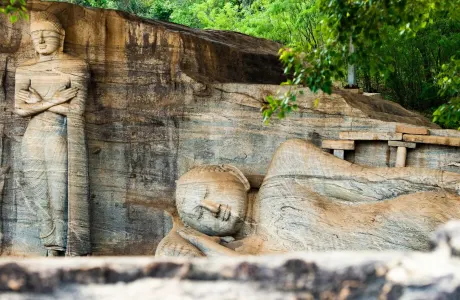
Gal Vihara
12th-century rock sanctuary with four Buddha figures carved directly into a single granite face, including a 14m reclining parinirvana Buddha.
Explore →
Rankot Vihara
12th-century stupa standing 55m tall, the fourth largest in Sri Lanka, built by King Nissanka Malla in the Polonnaruwa ancient city.
Explore →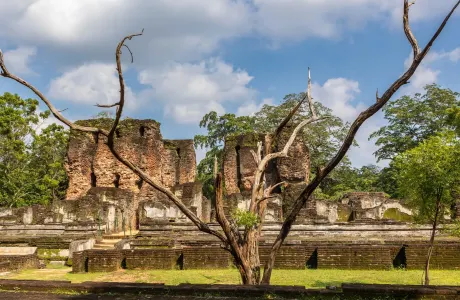
Royal Palace of King Parakramabahu I
12th-century palace ruins in Polonnaruwa, originally a seven-storey structure with 1,000 rooms, built by King Parakramabahu I around 1153 AD.
Explore →
Polonnaruwa Vatadage
12th-century circular relic house in Polonnaruwa with four seated Buddhas at the cardinal points, considered the finest example of its architectural form.
Explore →
PLAN YOUR VISIT
Ready to explore Lankatilaka Vihara Polonnaruwa?
Tell us your travel dates, group size, and preferences. Our team will build a personalised itinerary with accommodation, transport, and entry tickets: no booking fees, no online payment required.