
Rankot Vihara
12th-century stupa standing 55m tall, the fourth largest in Sri Lanka, built by King Nissanka Malla in the Polonnaruwa ancient city.
Duration
30-45 minutes as part of a full Polonnaruwa day
Entry Fee
$30 USD
Difficulty
easy
Budget
moderate
About Rankot Vihara
Rankot Vihara, built in the late 12th century during the reign of King Nissanka Malla, stands 55 metres tall and is the fourth largest stupa in Sri Lanka. Unlike the stupas of Anuradhapura, Rankot Vihara remains largely unrestored and retains the earthy, weathered appearance of a true ancient ruin, with trees growing from the brickwork and small shrines at its cardinal points. The stupa is constructed on the same architectural principles as the great Anuradhapura examples and served as a direct homage to that earlier tradition. It sits in the northern quarter of the Polonnaruwa archaeological park, near the Alahana Pirivena monastic complex. The combined Polonnaruwa ticket (USD 30, as of Sep 2026 per ccf.gov.lk) provides access to all major sites in the ancient city.
Highlights
- 55m tall stupa, fourth largest in Sri Lanka
- Built by King Nissanka Malla, late 12th century
- Part of the Alahana Pirivena monastic complex
- UNESCO World Heritage Site
- Largely unrestored, retaining original weathered appearance
Practical Tips
Rent a bicycle at Polonnaruwa town to cover the archaeological park comfortably; the park is too spread out to walk entirely.
Combined Polonnaruwa ticket (USD 30, as of Sep 2026 per ccf.gov.lk) covers Rankot Vihara and all other major sites.
The northern part of the park (where Rankot Vihara is located) is quieter and less crowded than the central ruins.
Explore by Interest
Best Time to Visit
Best time of day: Dry season, May to September (east coast dry period); early morning before 9am.
Location
Planning Info
- Crowd level
- Usually quiet
- Physical difficulty
- easy
- Setting
- mixed
- Child friendly
- Yes
- Senior friendly
- Yes
- Budget level
- moderate
- Photography
- ★★★★☆
Plan Your Visit
Want to include Rankot Vihara in your Sri Lanka itinerary? Our team builds personalised plans: no booking fees, no online payment.
ALSO IN THE AREA
Nearby Destinations
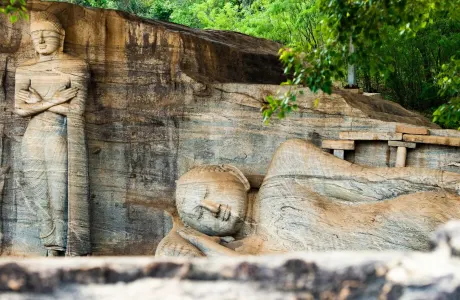
Gal Vihara
12th-century rock sanctuary with four Buddha figures carved directly into a single granite face, including a 14m reclining parinirvana Buddha.
Explore →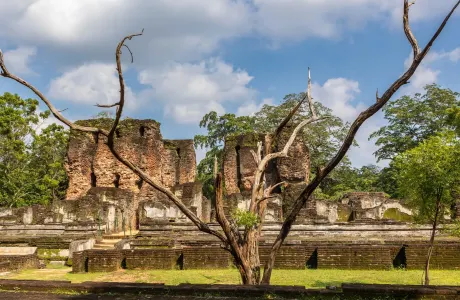
Royal Palace of King Parakramabahu I
12th-century palace ruins in Polonnaruwa, originally a seven-storey structure with 1,000 rooms, built by King Parakramabahu I around 1153 AD.
Explore →
Lankatilaka Vihara Polonnaruwa
12th-century image house in Polonnaruwa with 17m tall walls, housing a giant headless standing Buddha figure above its ornate brick doorway.
Explore →
Polonnaruwa Vatadage
12th-century circular relic house in Polonnaruwa with four seated Buddhas at the cardinal points, considered the finest example of its architectural form.
Explore →PLAN YOUR VISIT
Ready to explore Rankot Vihara?
Tell us your travel dates, group size, and preferences. Our team will build a personalised itinerary with accommodation, transport, and entry tickets: no booking fees, no online payment required.