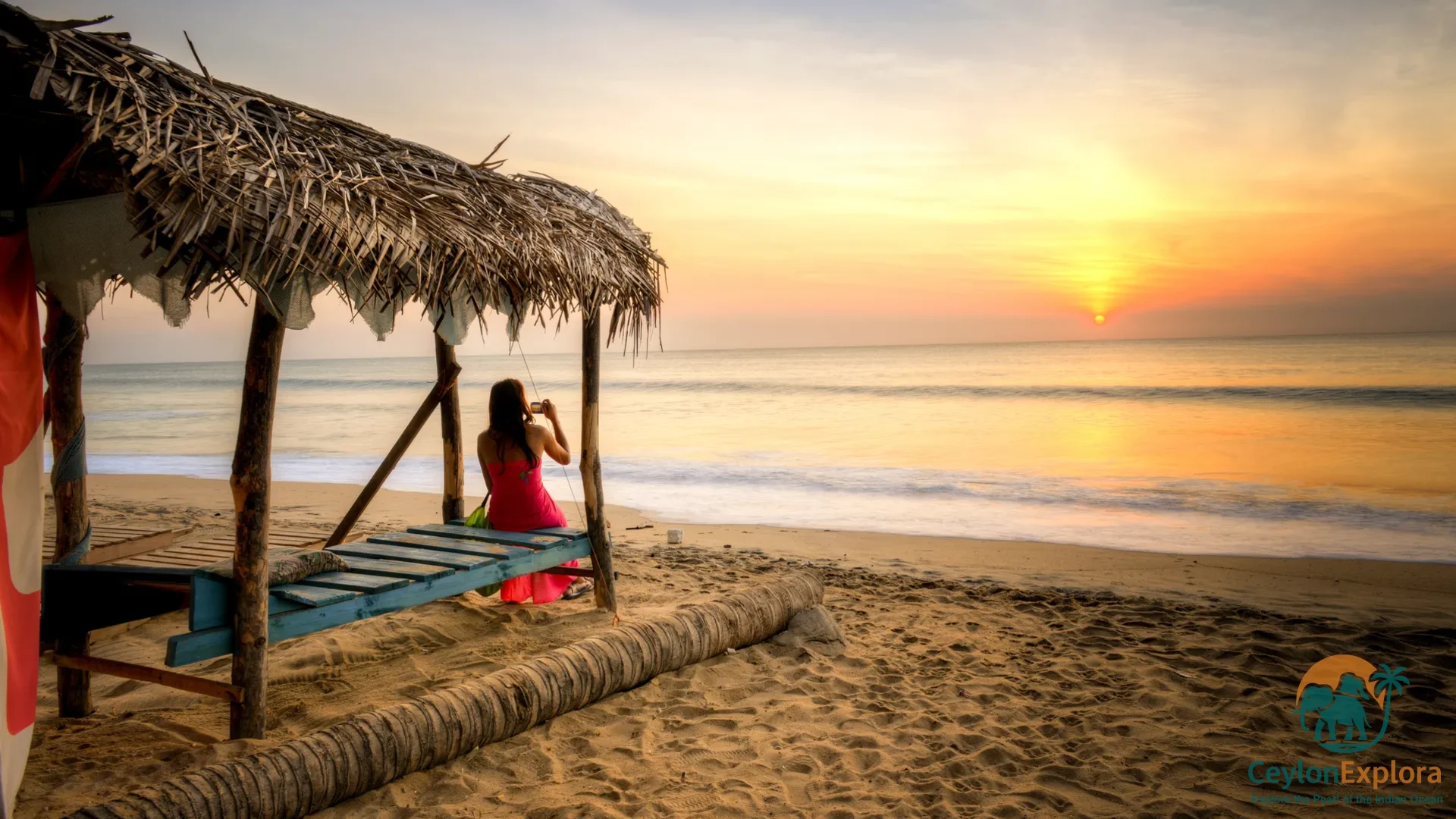

What Arugam Bay Is
Arugam Bay is a small beach settlement on Sri Lanka's southeast coast in Ampara District, 4 kilometres south of Pottuvil town. It sits at the end of a long, straight road that cuts through dry-zone scrub and rice paddies from the interior, and the journey to it from most of Sri Lanka takes the better part of a day. That distance is part of the point: Arugam Bay has remained less developed than the south coast beaches partly because getting here requires more commitment.
The bay is known primarily for surfing. Main Point, the right-hand reef break that breaks directly in front of the village, has been drawing surfers from the 1970s onward and now produces some of the longest and most consistent right-handers in the Indian Ocean during the April to October season. Beyond the surf, the surrounding area includes Pottuvil Lagoon with its crocodiles and bird life, and Kumana National Park, one of the most important bird sanctuaries in Sri Lanka, approximately 20 kilometres south.
The east coast operates on the opposite seasonal pattern from the south and west. When Mirissa and Hikkaduwa go rough from May to October, Arugam Bay is at its best. The two coasts complement each other for anyone spending two or more weeks in Sri Lanka.
Practical Information
Best time to visit: April to October. Peak surf June to August. April to May and September to October are quieter shoulder months with fewer crowds and lower prices
Off season: November to March, when the northeast monsoon hits the east coast with onshore winds, heavy rain, and rough seas. Most surf businesses and guesthouses close during this period
Getting there from Colombo: Approximately 8 hours by private car (about 316 km), with a stop possible along the way and your board bag and luggage handled the whole trip. Budget alternative: an overnight bus departs around 20:00 to 21:00 and arrives Pottuvil around 03:00 to 03:15 (approximately 6 to 6.5 hours, roughly LKR 2,600); a tuk-tuk covers the last leg from Pottuvil bus station to Arugam Bay in about 10 minutes
Getting there from Ella: Approximately 2.5 hours by private car (131 km). Budget alternative: bus via Wellawaya and Monaragala, approximately 3 to 4 hours with a likely change; a tuk-tuk covers the last leg from Pottuvil to Arugam Bay
Getting there from Trincomalee: Approximately 255 kilometres by road, around 5 hours by private car. There is no practical direct bus for this route
How long to allow: Two to three nights for non-surfers wanting the lagoon and Kumana. Four to five days for recreational surfers. A week or more for those wanting to work through the full range of breaks at different conditions
Accommodation: Wooden guesthouses, surf camps, and beach cabanas dominate. Increasingly there are mid-range boutique options, but Arugam Bay has kept a rustic character compared to south-coast resort beaches. Budget options from roughly LKR 3,000 to 4,000 per night
The Surf Season

Arugam Bay's surf season runs April to October, driven by the southwest monsoon delivering south-southeast swells to the east coast and keeping winds offshore. Peak consistency falls in June, July, and August. The sandbars that shape the best sections at Main Point are typically fully formed by July, which is when the longest and most well-shaped rides happen. Wave height during peak season ranges from clean 3-footers to 6 to 8-foot sets.
April, May, September, and October are the shoulder months: less consistent swells, smaller crowds, lower prices. Worth considering if you are flexible and not chasing the biggest conditions. From November to March, the northeast monsoon makes surfing here impractical for most people: onshore winds chop the surface, rain is heavy, and most operators close.
The Surf Spots
Main Point
Main Point is the break the bay is known for. It is a right-hand reef and point break directly in front of the village, walkable from most accommodation. On a good swell it produces rides of 200 to 500 metres across three distinct sections with turns and some hollow sections on the bigger sets. It works best at 5 to 8 feet with a south-southeast swell and low wind. The break suits intermediate to advanced surfers; it is not a beginner wave on good days. In June and July the lineup is genuinely competitive. Early morning sessions, before 7am, have significantly fewer people.
Baby Point
Baby Point sits inside Main Point, adjacent to the main break, and is the standard beginner spot. The wave is a mellow right-hander over a sandy bottom, working best at 2 to 3 feet. The sandy floor and gentle wave shape make it one of the more accessible learner waves in Sri Lanka. Surf schools and rental boards operate from the beach here throughout the season.
Peanut Farm
Peanut Farm is a right-hand point break about 20 minutes south of the village by tuk-tuk. The outside section is steep; the peak wraps into a better-shaped inside section over boulders. It suits beginners to intermediate surfers and is a practical alternative when Main Point is too crowded or too big. Works best at 3 to 5 feet.
Whisky Point
Whisky Point is 10 to 15 minutes north by tuk-tuk, a right-hand point over rock and sand with rides of 100 to 200 metres. It is beginner to intermediate, with open shoulders for turns. Multiple sources note that Whisky Point has become less consistent in recent years and no longer produces the reliable, well-shaped waves that once made it a regular stop. It is worth checking but not worth planning around.
Elephant Rock and Pottuvil Point
Further north toward Pottuvil town is Pottuvil Point, a right-hand point over boulders and sand that holds up on bigger swells. It is inconsistent and only worth the trip when a notable swell is running. Elephant Rock, accessed via the Panama road south of town, is a mellow right-hand point suited to high-volume boards and longboards. The lagoon adjacent to Elephant Rock has crocodiles; the name is not decorative. Stay clear of the water's edge away from the break itself.
Pottuvil Lagoon

Pottuvil Lagoon sits approximately 4 kilometres from Arugam Bay, adjacent to Pottuvil town. The lagoon covers around 200 acres and connects to the ocean through a mangrove-lined estuary. Guided boat trips run in the early morning and late afternoon, the best times for wildlife observation. The lagoon supports mugger crocodiles, water monitors, kingfishers, herons, egrets, cormorants, and fishing eagles. Over 200 bird species have been recorded in the lagoon system. The estuary where the lagoon meets the ocean is the most photogenic section.
Motorised and paddle boat tours are available from local operators. A guided tour costs approximately USD 29 per person including entry and safety equipment. Book through your guesthouse or a registered operator rather than from an approach on the street.
Kumana National Park

Kumana National Park is approximately 20 to 25 kilometres south of Arugam Bay, reached by jeep via Panama and Okanda (approximately 45 to 60 minutes on rough roads). The park covers approximately 18,150 hectares and adjoins Yala National Park to the west. It is primarily a bird sanctuary: over 255 species have been recorded, and the large internal tank (wewa) is one of the most significant wading bird nesting and feeding grounds in Sri Lanka. Key species include the black-necked stork (rarely found elsewhere in Sri Lanka; Kumana holds the first confirmed nesting record for the species), lesser adjutant stork, painted stork, Eurasian spoonbill, and dozens of migratory wader species. April to July is the best window for birds, with May and June particularly active for nesting.
The park also has Sri Lankan leopards, elephants, spotted deer, wild boar, and mugger crocodiles around the tanks. Leopard sightings are less predictable than in Yala Block 1, but the park sees far fewer vehicles, making sightings more rewarding when they happen. Walking safaris are not permitted; you must enter by jeep. Entry costs approximately USD 12 per adult foreigner plus taxes and service charges (verify current rates as Sri Lanka revises national park fees). Arrange a jeep from Arugam Bay through your guesthouse or a registered wildlife operator.
Note: elephants regularly cross the road between Arugam Bay and Kumana at night. If you are driving the Panama road after dark, go slowly.
Pottuvil Town
Pottuvil is the functional hub of the area — the bus station, the market, the fish harbour, and the administrative center that keeps Arugam Bay running. The town's population is approximately 33,600 and is predominantly Muslim (around 78 percent), with the mosques, local market, and daily life of the town offering a different pace and texture from the beach strip to the south. The fish market is worth a visit early in the morning when boats come in. Pottuvil operates year-round, unlike Arugam Bay, which partially closes during the northeast monsoon season.
Getting to Arugam Bay
Arugam Bay's remoteness is genuine. There is no train station; the nearest railway connection is Batticaloa, well to the north. A private car from Colombo (around 8 hours) or from Ella (around 2.5 hours) is how most travellers make this trip: the driver holds your boards and bags, and you arrive rested rather than off an overnight bus. Budget alternatives: an overnight bus from Colombo (around 6 to 6.5 hours, departing around 20:00) or a bus from Ella via Wellawaya and Monaragala (3 to 4 hours). From Pottuvil bus station, tuk-tuks to the bay take 10 minutes. The road from Ella runs through hill country and dry-zone scrub; it is a good road by Sri Lankan standards, and the scenery changes markedly as you descend from the highlands into the flat eastern coastal plain.
Combining Arugam Bay with the Rest of Sri Lanka
Arugam Bay pairs naturally with Ella (2.5 hours by private car) as part of a hill country and east coast combination. The return route via Wellawaya and Colombo allows a stop at Udawalawe National Park (elephants, approximately 2 hours from Wellawaya) on the way back.
If you want a private car from Ella to Arugam Bay, or a driver for the east coast including Kumana, the team at CeylonExplora can arrange it. Get in touch to plan the route.



From Fellow Travellers
Comments
No comments yet
Been here, or planning your own trip? Share your experience below and help the next traveller.
Leave a Comment
Comments are reviewed before publishing. No links, please. Email is optional and never shown.