
Ayurveda in Sri Lanka: A Practical Guide to Wellness and Traditional Medicine
Sri Lanka has a longer continuous tradition of formalised medicine than almost any country you can visit for wellness travel. Its foundational medical text, the Sarartha Sangrahaya, was written by King Buddhadasa in 398 CE. A 13th-century Pali medical manuscript, the Bhesajja Manjusava, is the only Ayurvedic text listed under UNESCO's Memory of the World programme. Government regulation of Ayurvedic practice in Sri Lanka predates most Western countries' regulation of chiropractic or naturopathy, starting with the Ayurveda Act of 1961.
That history matters to tourists because it means Sri Lanka has something to offer beyond the "spa Ayurveda" that has spread globally: a distinct medical tradition with its own practitioners, texts, endemic plant species, and regulatory framework. This guide explains the difference, names the places that deliver the real thing, and tells you what to look for so you do not pay for a coconut oil massage wrapped in Sanskrit marketing language.
Sri Lanka's Ayurvedic Tradition Is Not Purely Indian Ayurveda
The system practised in Sri Lanka is a composite of three overlapping traditions. Classical Indian Ayurveda (drawing on the Charaka Samhita and Sushruta Samhita texts) arrived with contact from the subcontinent. Deshiya Chikitsa is a body of indigenous prescriptions built over roughly 3,000 years of Sri Lankan practice, independent of the Sanskrit texts. Hela Wedakama is the umbrella term for all of Sri Lanka's indigenous healing knowledge, which predates the arrival of Indian Ayurveda on the island and is not simply a subset of it.
The practical difference is botanical. Sri Lanka's flora includes over 3,771 flowering plant species, of which approximately 927 are endemic to the island. Of the 1,430 plant species considered to have medicinal value, 174 are found nowhere else in the world. Indian practitioners simply do not have access to these species. A Hela Wedakama formula using Binkohomba (Munronia pinnata), a critically endangered highland shrub used in fever, diabetes, and anti-inflammatory preparations, cannot be replicated in Mumbai or Chennai.
Several endemic plants are worth knowing by name because you will encounter them in Sri Lanka's wellness culture. Weniwel (Coscinium fenestratum), a vine with a yellow stem due to its berberine content, is used for infectious disease and wound healing. Gotu kola (Centella asiatica) appears in virtually every traditional Sri Lankan breakfast as part of kola kanda, a hot rice gruel made with coconut milk and the fresh juice of medicinal greens. Kola kanda is a distinctly Sri Lankan wellness practice: you will not find it in an Indian Ayurveda resort, and it is served every morning at most serious Ayurveda resorts here.
The traditional village healer in Sri Lanka, the Veda Mahaththaya, operates through family lineages of knowledge passed down for generations, often including plant preparations and diagnostic techniques that exist nowhere in written form. The Hettigoda family, who built the Siddhalepa brand from 1934 onwards, trace their lineage this way. This is a different kind of specialist from a government-registered BAMS physician, and both can be legitimate depending on what you are seeking.
Panchakarma: What It Actually Is
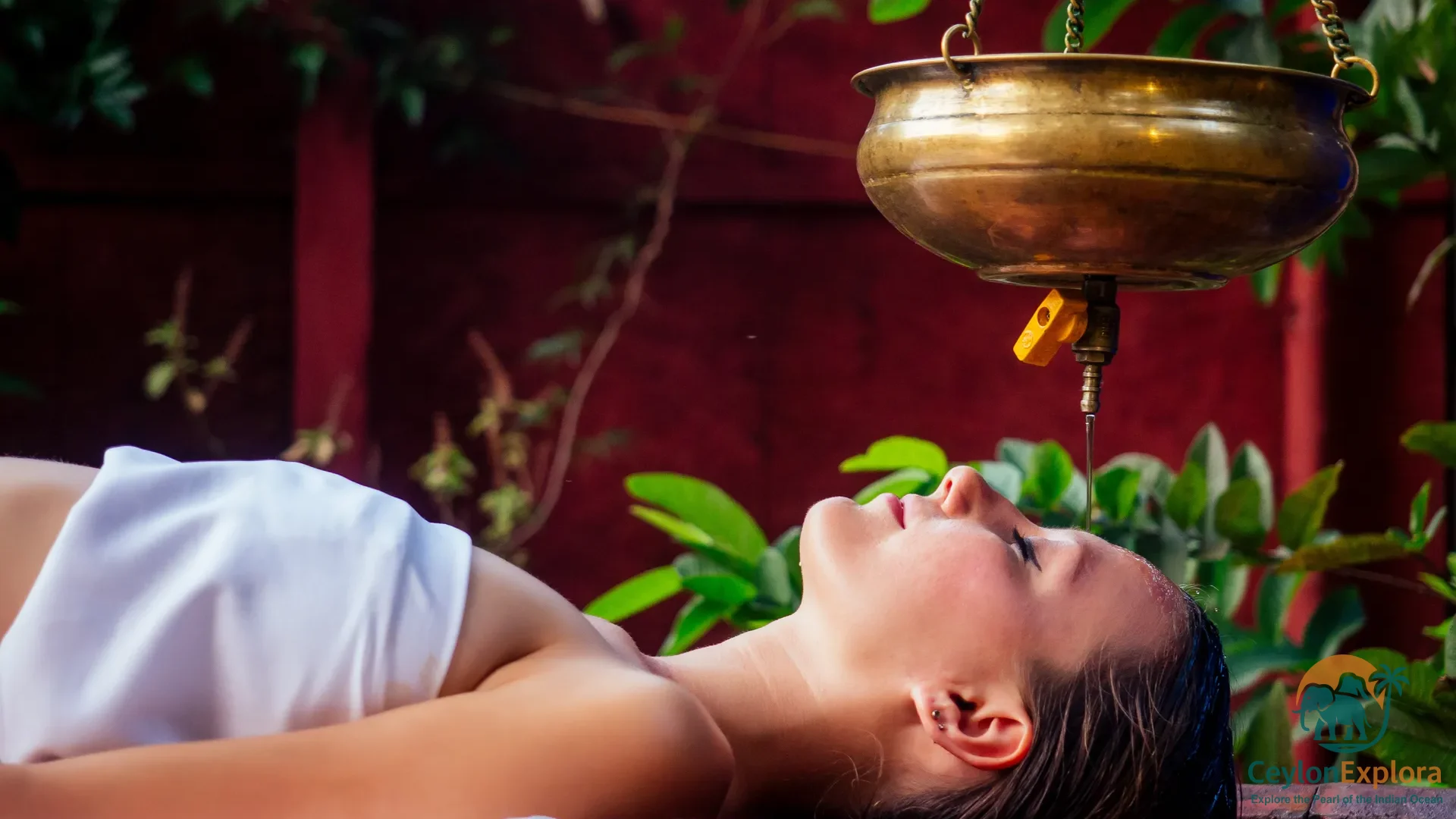
Panchakarma, literally "five actions" in Sanskrit, is the classical Ayurvedic detoxification protocol. The five procedures are Vamana (therapeutic emesis), Virechana (purgation via herbal medicine), Basti (herbal enema), Nasya (nasal administration of herbal oils or powders), and Raktamokshana (blood purification, performed today primarily with leech therapy). Not all five are given to every patient. The treating physician selects procedures based on constitution, age, and medical condition.
What most resorts advertise as Panchakarma is not the full protocol. A standard Abhyanga (synchronised four-hand oil massage) is a preparatory therapy within Panchakarma, not one of the five karmas themselves. Calling a daily massage session "Panchakarma" is technically inaccurate, though the term has become so broadly used that most practitioners and guests use it interchangeably. What matters practically is the minimum duration.
Authentic Panchakarma requires a preparatory phase of 3 to 7 days (internal and external oleation, heat treatments), followed by the main purification procedures, followed by a dietary restriction phase for recovery. A meaningful programme covering one to two detox procedures requires at least 14 days. A full classical protocol takes 21 to 28 days. A "7-day Panchakarma" allows time for the preparatory phase only and should be understood as an introduction, not a complete course. If you are coming specifically for Panchakarma to address a chronic health condition, budget 21 days minimum.
One honest note on the science: Western medicine has not conducted large-scale randomised controlled trials on Panchakarma. Some specific herbal interventions and the stress-reduction benefits of extended residential treatment have shown positive results in smaller studies. This is a traditional medical system operating on a different framework of health than Western biomedicine, and patients on long-term pharmaceutical medication should disclose this to the treating physician, as some Ayurvedic herbs interact with common drugs.
Where to Go: Resorts and Regions
Beruwala and Bentota, South-West Coast
This stretch of coastline, approximately 60 to 85 km south of Colombo Airport, is Sri Lanka's highest-density Ayurveda resort zone. Barberyn Reef, which opened in 1984, is credited as the first Ayurveda resort specifically open to international tourists, and the cluster of competitors around it has made Beruwala the default destination for European wellness travellers, particularly from Germany, Austria, and Switzerland.
Barberyn Reef Ayurveda Resort has 75 rooms and a protected swimming lagoon formed by a natural reef. Treatment is mandatory for all guests (it is not a standard beach hotel). The Ayurveda treatment charge runs approximately €100 to €110 per person per day (as of early 2026; verify directly with the resort), charged on top of room rates. A 21-night stay at a double room combines to approximately €4,200 to €7,200 per person depending on room type. The group also operates Barberyn Sands (Bentota), Barberyn Beach, and Barberyn Waves (both Weligama).
Siddhalepa Ayurveda Health Resort (Wadduwa, near Beruwala) is the only property in Sri Lanka affiliated with its own Ayurveda hospital and an in-house therapist training centre. The Hettigoda family manufactures all its medicines in ISO and GMP-certified facilities. The resort has over 40 qualified medical professionals and offers 21 to 28-night Panchakarma courses alongside shorter programmes for weight management, blood purification, and anti-ageing treatments. Programme costs begin at approximately $800 USD per person for entry-level courses; full Panchakarma programmes are substantially higher. Confirm current pricing directly.
Heritance Ayurveda Maha Gedara, also in Beruwala, was designed by Geoffrey Bawa, Sri Lanka's most celebrated architect. It operates as adults-only with no alcohol and no red meat; it is structured as a digital detox. Wi-Fi is not promoted. Treatment programmes are all-inclusive with meals adjusted to your constitution.
Negombo, Near the Airport
The main reason to consider Negombo for Ayurveda is logistics: it sits approximately 12 km from Bandaranaike International Airport, meaning you can begin treatment within hours of arrival or complete your programme and depart without losing a travel day. Jetwing Ayurveda Pavilions has 36 rooms, of which 12 are pavilion-style units and a dedicated Ayurvedic restaurant (Koththamalli by Rohan) serving a vegan and vegetarian menu. Packages range from approximately $1,990 to $5,320 per person depending on duration and season (as of 2025/2026; verify with the resort).
South Coast: Weligama, Ahangama, Tangalle
This stretch of coastline is Sri Lanka's most active area for independent yoga retreats and smaller wellness providers. The south coast generally draws a younger and more independent demographic than the Beruwala corridor.
Hill Country: Kandy and Kurunegala
Santani Wellness Kandy, set on a former tea estate 32 km from Kandy at elevation, is the only purpose-built mountain wellness resort in Sri Lanka. Rooms have no air conditioning or television by design. Two Ayurvedic doctors rotate on staff alongside a permanent yoga teacher. Retreat lengths run from 3 to 7 nights, focusing on detox, immune support, and recovery programmes. Pricing starts from around $250 to $280 USD per person per night on full board (as of early 2026; verify current rates).
Ulpotha, near Kurunegala, is a working organic rice farm that opens for wellness retreats roughly six months per year (November to March and June to August). Accommodation is in open adobe huts with no electricity, around a bathing lake. Two yoga sessions per day are led by international teachers. Ayurveda programmes run from 3 days to 28 days, with a one-on-one physician consultation and one massage per week included in the 14-night retreat price of $2,940 USD per person (twin share, as of 2025/2026). Ulpotha is widely regarded as the most internationally recognised residential wellness experience in Sri Lanka and represents strong value relative to equivalent European or South-East Asian alternatives.
How to Identify a Qualified Practitioner
This is the most practical skill for a wellness tourist to develop, because the difference between a clinical Ayurveda programme and an oil massage in a candlelit room can be difficult to distinguish from the marketing.
The formal credential to look for is a BAMS (Bachelor of Ayurvedic Medicine and Surgery), a six-year programme (five years of study plus a one-year internship) offered at the University of Colombo's Institute of Indigenous Medicine and equivalent institutions. BAMS graduates are registered with the Sri Lanka Ayurveda Medical Council and can legally diagnose and prescribe. Below this level, the Department of Ayurveda certifies NVQ Level 4 Ayurvedic Massage Therapists, who are trained to deliver massage and topical treatments but are not qualified to diagnose or conduct Panchakarma.
The clearest signal that you are in a genuine clinical programme: before any treatment begins, a physician sits with you for 30 to 60 minutes and conducts nadi pariksha (pulse diagnosis), examines your tongue, skin, and eyes, asks about your digestion, sleep, stress, and medical history, and produces a written treatment and diet plan personalised to your constitution. If no physician consultation is offered before treatment, you are receiving spa services, not clinical Ayurveda. Both can be worthwhile; the important thing is to know which you are buying.
Beyond Ayurveda: Yoga, Meditation, and Herbal Food
Sri Lanka's wellness offer extends beyond residential Ayurveda. Buddhist meditation retreats, ranging from free monastery programmes to structured paid retreats, are available across the island. The south coast has a particularly active yoga scene with independent studios and retreat centres in Weligama, Ahangama, and Unawatuna. For serious practitioners, Ulpotha's set-date yoga retreats with international teachers are consistently reviewed among the best in Asia.
One accessible and entirely authentic wellness practice available anywhere in Sri Lanka is the morning kola kanda. Ask your hotel or guesthouse; almost any place with a Sri Lankan cook can prepare it. The standard version uses gotu kola, karapincha (curry leaves), and welpenela cooked with raw rice and coconut milk, served hot with a piece of jaggery. It costs almost nothing, it has been part of Sri Lankan morning culture for centuries, and it is a more honest expression of the country's healing traditions than many hotel spa menus.
Seasonal Timing
Traditional Ayurvedic teaching holds that monsoon season is the ideal time for treatment, not a reason to avoid it. The logic is that higher humidity increases transdermal absorption of medicated oils and cooler temperatures reduce the body heat that intensive oleation can generate. This is a genuine classical principle, not a marketing invention, and most serious Ayurveda resorts on the south-west coast offer meaningful price reductions in the monsoon months (roughly May to October) for exactly this reason. Barberyn reduces its treatment charge; Surya Lanka applies a 25% discount on rooms and treatment from late April to early November.
For travellers who want dry weather alongside their wellness programme, the south-west coast (Beruwala, Bentota) is best from November to April. The hill country resorts (Santani, Ulpotha) work year-round at a cooler, more consistent temperature of 22 to 26°C.
Planning Your Wellness Trip
The minimum stay worth considering for a genuine Ayurvedic experience is 7 nights, which allows the preparatory phase and one or two treatments to be completed properly. For Panchakarma targeting a specific health condition, budget 21 nights. For a yoga and wellness retreat with light Ayurvedic treatment, 7 to 14 nights at a place like Ulpotha or Santani is realistic.
Ceylon Explora can help match your wellness priorities and timing to the right programme and location. Contact us at hello@ceylonexplora.com or via WhatsApp at +94 71 777 7558. If you want a specific Ayurveda resort combined with cultural sites or beach time, we handle the routing so you are not bouncing between places in a way that undermines the reset you came for.
From Fellow Travellers
Comments
No comments yet
Been here, or planning your own trip? Share your experience below and help the next traveller.
Leave a Comment
Comments are reviewed before publishing. No links, please. Email is optional and never shown.