Sri Lanka's cultural calendar is dense enough to anchor an entire trip around. The island has twelve public holidays on the lunar cycle, a ten-night Buddhist procession in Kandy, distinct regional dance traditions with roots in royal ritual and exorcism, and a craft heritage with specific village-level origins. This guide covers what those things are specifically, when they happen, and how to engage with them as a visitor rather than a spectator.
The Major Festivals
Kandy Esala Perahera

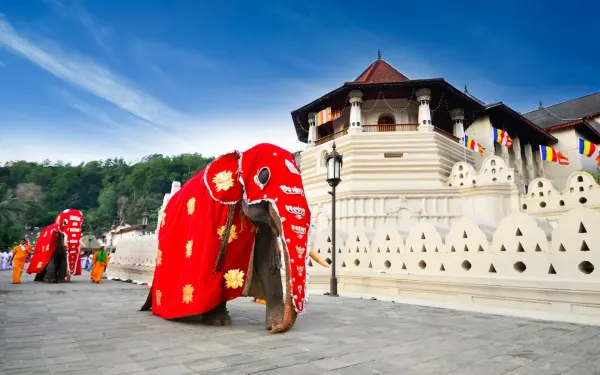
The Kandy Esala Perahera is the annual procession of the Temple of the Tooth and four devale shrines. It runs for ten nights, typically in late July and early August, with dates shifting each year according to the lunar calendar. Check kandyesalaperahera.com for confirmed dates close to your travel dates.
The festival is divided into two phases. The first five nights are the Kumbal Perahera, considered the more sacred phase and somewhat smaller in scale. The final five nights are the Randoli Perahera, the climax of the festival, when the processions are largest and the crowds heaviest. Five institutions participate: the Sri Dalada Maligawa (Temple of the Tooth) and the four Devale shrines dedicated to the guardian deities Natha, Vishnu, Kataragama, and Goddess Pattini.
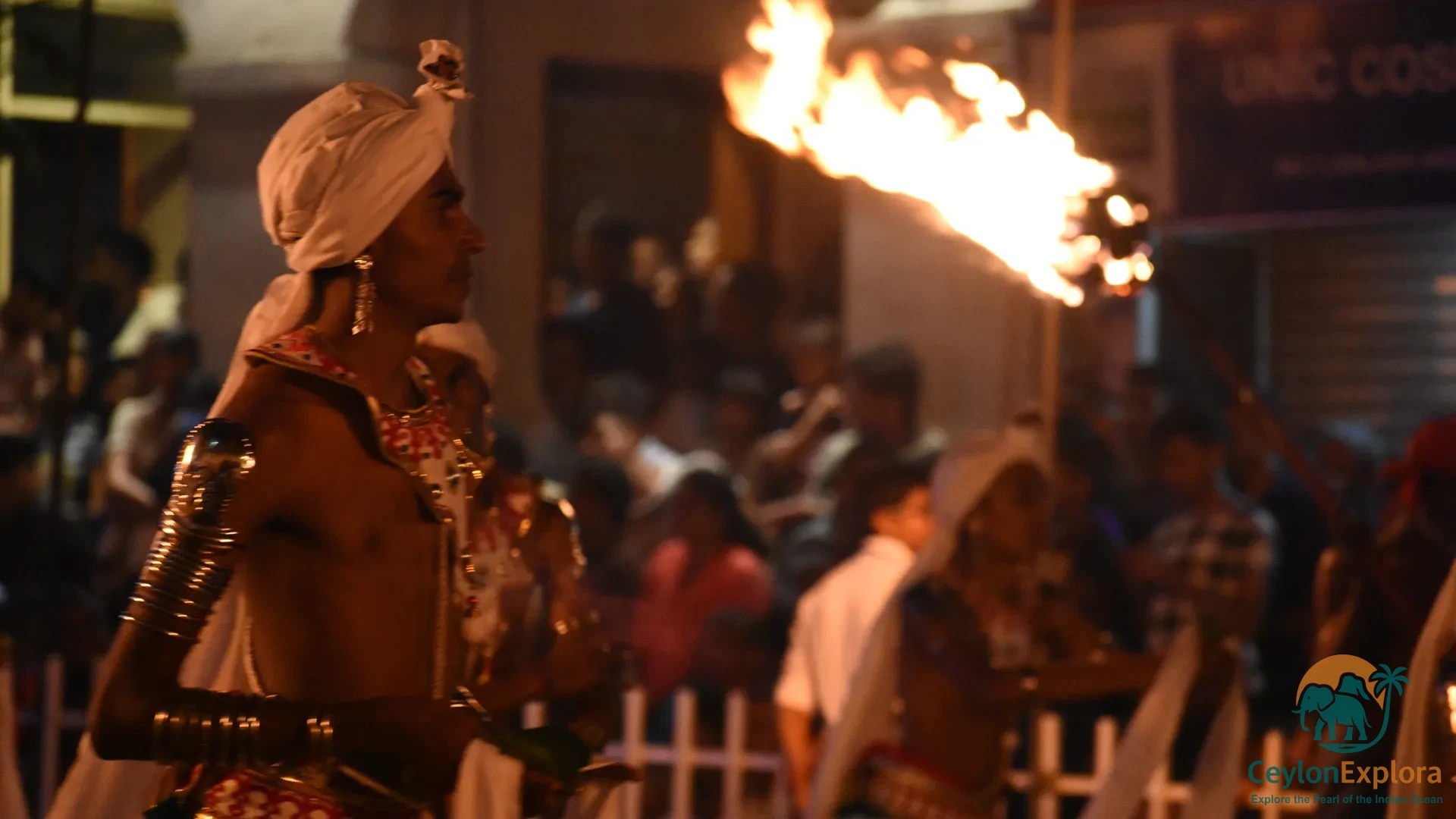
The centrepiece of the procession is the Maligawa Tusker, carrying a golden casket on an ornate palanquin. One common travel writing error is worth correcting: the actual tooth relic of the Buddha remains sealed in seven nested caskets inside the temple's inner shrine and is never moved. What is carried in procession is a replica casket. This practice dates to the British colonial period, when the original was deemed too precious to risk. The procession also includes over 50 decorated elephants and tuskers, hundreds of Kandyan dancers and drummers, fire performers, torch bearers, and whip-crackers (kas karayas). A final daytime procession on the last day includes the Diya Kepeema ceremony, in which the casket is symbolically taken to the Mahaweli River.
For families and first-time visitors, the best strategy is the Kumbal Perahera nights (first five): crowds are significant but manageable, grandstand seating is available at several designated points along the route, and the full spectacle is present. The final Randoli nights draw enormous crowds with very limited movement. Arrive early and be seated by 5:00 to 5:30 pm before road closures and security cordons tighten; the procession leaves the temple at an astrologically set auspicious time (Nekatha), typically around 6:30 to 7:00 pm, and runs for two to three hours. Book Kandy accommodation three to six months in advance for the final three nights.
Vesak Poya
Vesak falls on the full moon of May and commemorates the birth, enlightenment, and passing of the Gautama Buddha, all believed to have occurred on the same day. In 2027, Vesak Full Moon Poya Day falls on May 19, followed by the Day Following Vesak public holiday on May 20 (confirm against the official Poya calendar), with a national Vesak Week observed around the date. Alcohol and meat sales are banned islandwide for the holiday; most shops and offices close; public transport runs on reduced schedules.
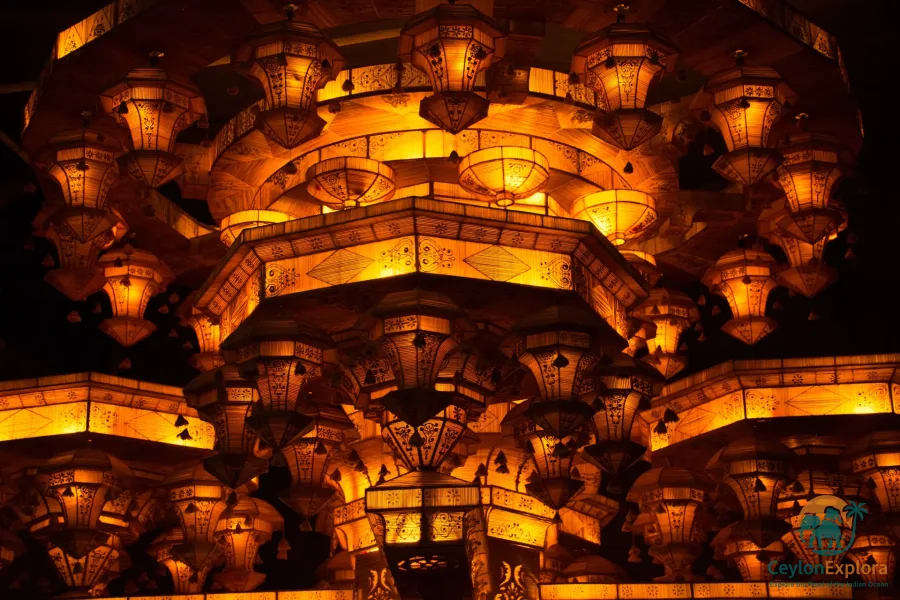
Three things make Vesak worth building an itinerary around. The first is pandols (thoranas): large electrically lit structures erected at public locations islandwide, depicting scenes from the Buddha's life, some reaching several storeys tall and sponsored by major businesses and religious organisations. Colombo's Kelaniya area and Kandy's city centre have the most elaborate displays. The second is paper lanterns (Vesak koodu) hung at homes throughout the country, visible from the road in every town and village. The third is dansalas: free food stalls set up along roadsides by community groups, distributing full meals, tea, and sweets to all passers-by regardless of religion or background. Foreign visitors can eat at any dansala alongside locals; no money changes hands and no thanks are expected. The giving is considered an act of merit by the provider.
Poson Poya
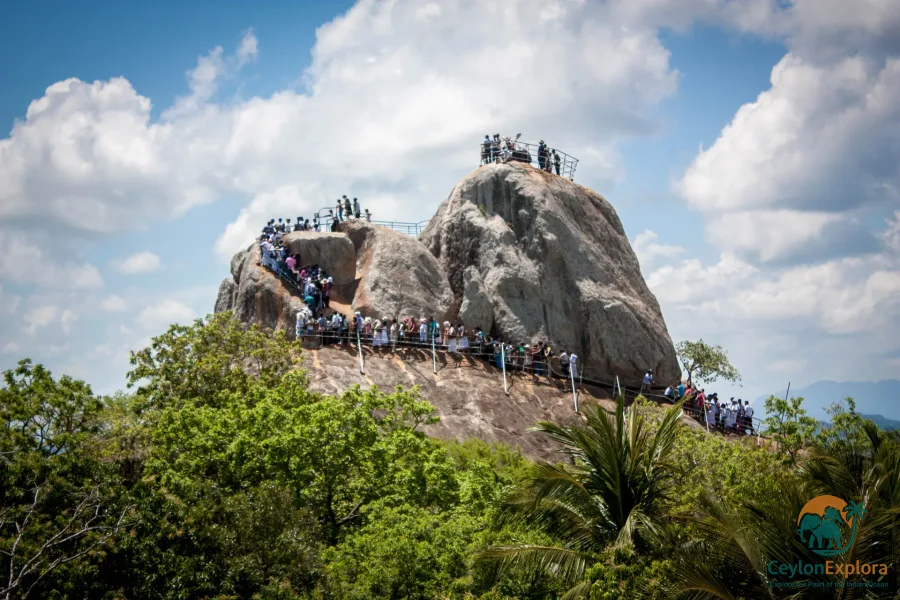
Poson falls on the full moon of June each year (the exact date shifts annually; check the official Poya calendar close to your travel dates) and commemorates the arrival of Buddhism in Sri Lanka in approximately 236 BCE. The central site is Mihintale, near Anuradhapura in the North Central Province. On Mihintale hill, the monk Mahinda Thera, son of the Indian Emperor Ashoka, is said to have first encountered King Devanampiyatissa during a royal hunt and delivered the sermon that began the conversion of the island to Buddhism. White-robed pilgrims from across the island climb the 1,840 granite steps to the Ambasthale Dagoba at the summit, the site of that first sermon. Poson is ranked as the second most important Buddhist holiday after Vesak, and the atmosphere at Mihintale during the full moon night is one of the more moving things Sri Lanka offers a visitor willing to make the journey to Anuradhapura.
Sinhala and Tamil New Year (Avurudu / Puthandu)
The Sinhala and Tamil New Year falls on April 13 to 14, fixed dates tied to the sun's transition between zodiac houses rather than January 1. It is celebrated by both the Sinhalese and Tamil communities, though with slightly different names and some variation in ritual. The correct full name is "Sinhala and Tamil New Year."
The central domestic ritual is lighting the cooking fire at an exact auspicious time (Nekath) set by astrologers each year and announced on national radio and television. The woman of the household then cooks kiribath (milk rice) and the head of household feeds the first portions to family members at a separate designated minute. Several other activities, including bathing, oil application, eating, beginning work, and exchanging gifts, all happen at astrologically prescribed times on April 14, creating a structured day of ritual activity that differs from household to household only in the precise timing, not the content.
For visitors, the practical note is logistical: this is Sri Lanka's largest domestic travel period. Transport is heavily booked for the days around April 13 to 14, accommodation in beach and hill-country destinations fills with local tourists, and prices rise across the board. Book everything weeks in advance for mid-April travel, or choose accommodation outside the most popular holiday areas.
Thai Pongal
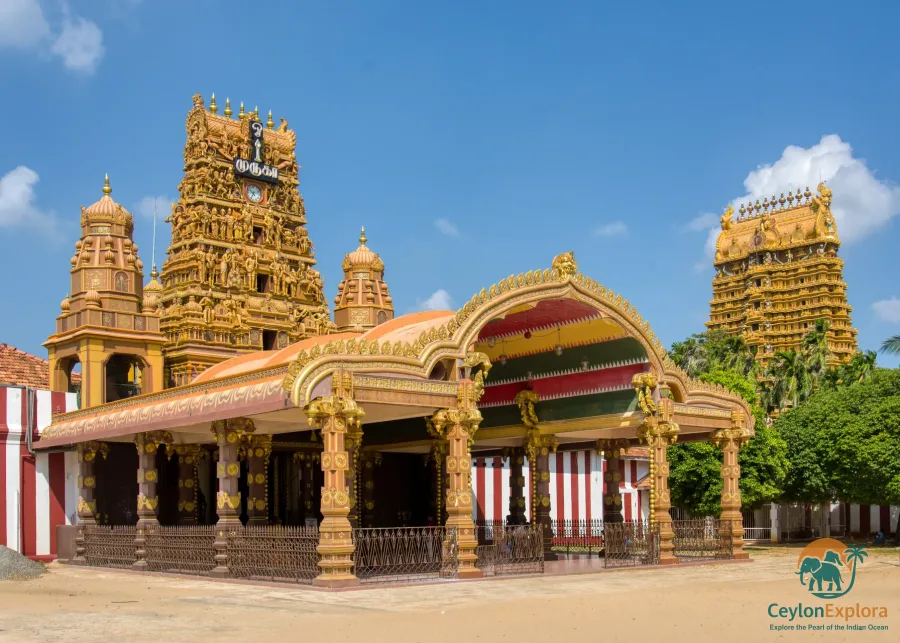
Thai Pongal falls on January 14 to 15 (the first day of the Tamil month of Thai) and is the Tamil Hindu harvest festival giving thanks to the sun god Suriya. It is a national public holiday. The key tradition is cooking sweet rice (Pongal) outdoors in a clay pot in direct sunlight; when the milk boils over the pot's rim, participants blow a conch shell and shout "Pongalo Pongal!" The overflow symbolises abundance. In Jaffna, bullock cart races (maadu viraiyal) are a prominent feature. Estate Tamil communities in the hill country hold temple offerings and cultural programmes. Thai Pongal in Sri Lanka follows South Indian Tamil traditions and lasts one to two days rather than the four-day Indian version.
Navam Perahera (Colombo)
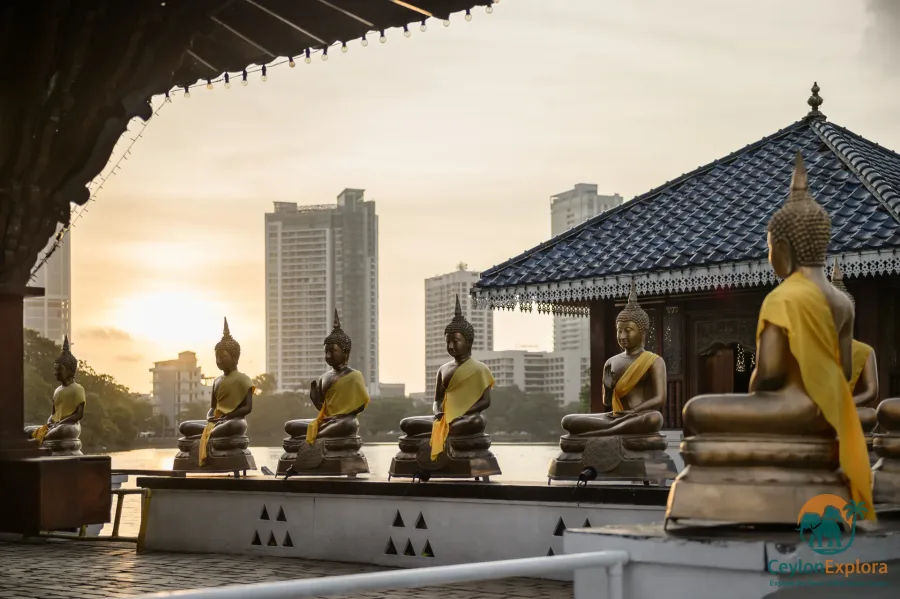
The Navam Perahera runs for two nights in February, held annually around Navam Poya (scheduled for February 19 and 20, 2027 per Gangaramaya Temple; confirm closer to travel), from Gangaramaya Temple on the shores of Beira Lake in Colombo 2. First held in 1979, it is a significantly younger event than the Kandy Perahera, but in scale of elephant participation it rivals or exceeds it: up to 100 decorated elephants join the procession alongside over 1,000 performers including drummers, dancers, stilt walkers, and fire performers. For visitors based in Colombo who cannot travel to Kandy, Navam is a worthwhile alternative: it requires no travel, is accessible from central Colombo hotels, and runs on two nights rather than ten, making planning straightforward.
Poya Days: Twelve Full Moon Holidays
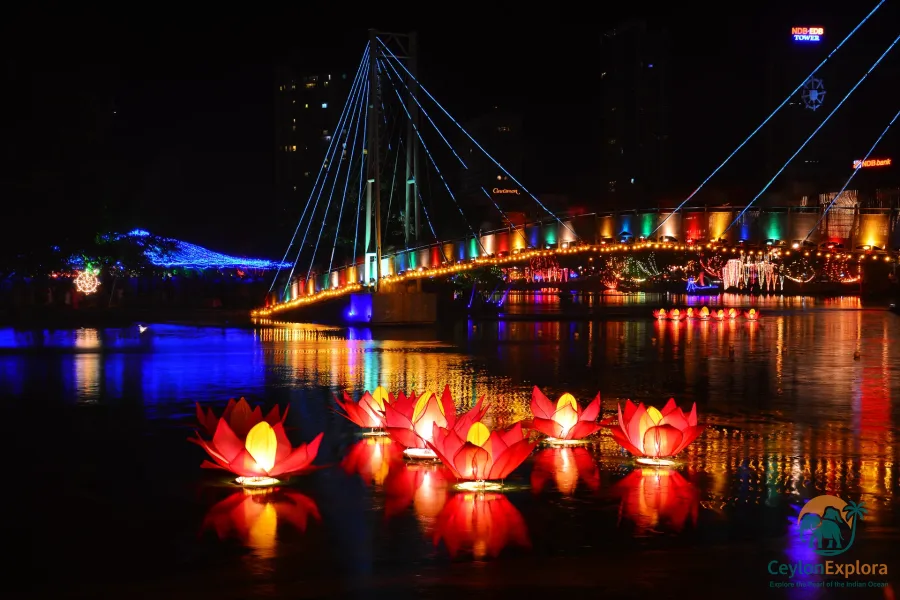
Every full moon day is a national public holiday in Sri Lanka, guaranteed under labour law. There are twelve per year, each with its own name (Duruthu in January, Navam in February, Vesak in May, Poson in June, Esala in July/August, and so on). On every Poya day: government offices, banks, and most businesses close; alcohol sales are banned by law islandwide; meat and fish sales are restricted in many areas; and liquor sections of supermarkets are closed. Tourist hotels, restaurants, and petrol stations remain open but may adjust hours. The practical tourist impact is mainly the alcohol prohibition and the need to book restaurant tables in advance, as popular spots fill with local residents observing the holiday. Do not expect to buy alcohol from a shop or be reliably served it at any establishment on a Poya day outside upmarket international hotels.
Dance Traditions
Sri Lanka has three recognised classical dance traditions, not one. Referring to all Sri Lankan traditional dance as "Kandyan dancing," which appears in much tourism writing, is inaccurate and erases two distinct regional forms.
Udarata (Kandyan) Dance

Originating in the central highlands around Kandy, Udarata dance derives from the Kohomba Kankariya, a multi-day healing and blessing ceremony performed for royalty in the Kandyan Kingdom. The male ves costume consists of a white lower cloth wrapped into loose trousers, a bare upper body covered with a beaded breast ornament, silver arm and shoulder pieces, and a tall silver headdress (ves tattuwa) with large ear ornaments. Female dancers wear a distinct sash costume. The dancer wears 64 prescribed ornaments. The principal drum is the Geta Beraya. There are five distinct forms within Udarata dance, including the 18 Vannams: named dances each imitating an animal or character, from the Gajaga Vannam (elephant) to the Hanuma Vannam (monkey).
Cultural shows in Kandy run daily at several city venues, typically starting at around 5:00 pm for about an hour, and cost roughly LKR 2,000 to 2,500 per person at community and association halls (such as YMBA and Red Cross) and higher at commercial lakefront venues. These use traditional costumes and trained dancers; they are oriented toward visitors but are not dishonest representations of the form. The Kandy Perahera itself is the main large-scale public setting in which to see the dance.
Pahatharata (Low-Country) Dance
Originating in the southern coastal lowlands, Pahatharata is a faster, more percussive form than Kandyan dance and has a different cultural root: it is primarily associated with tovil, a category of healing and exorcism ceremony. The most elaborate form is the Sanni Yakuma (also known as Daha Ata Sanniya), a ceremony in which a healer performs 18 masked dances, each embodying a specific demon who is believed to cause a particular illness. The demon is summoned, engaged in comic dialogue, and then banished. In its full form the ceremony runs through an entire night. Each of the 18 demons is represented by a distinct hand-carved mask. These are the "Sanni masks" most commonly seen in the craft shops and museums at Ambalangoda on the south coast. Sanni Yakuma is rarely performed in its complete form today, but shortened versions appear at cultural shows along the south coast.
Sabaragamuwa Dance
Sabaragamuwa dance originates in Sabaragamuwa Province, centred on Ratnapura, which sits geographically and culturally between the highlands and the southern lowlands. It is associated with the worship of the deity Saman, the guardian of Adam's Peak. Distinguishing features include the hands never being raised above the head (extended backward and outward instead) and a 32-dance repertoire. It draws elements from both Udarata and Pahatharata but is classified as a distinct tradition. It is significantly less accessible to tourists than Kandyan dance; the Ratnapura area is the primary location for performances in the traditional style.
The Mask Tradition and Ambalangoda
Ambalangoda, a coastal town approximately 107 km south of Colombo in Galle District, is nationally recognised as the centre of traditional mask carving in Sri Lanka. Masks are carved from Kaduru wood (nux vomica), which is lightweight and soft enough to carve fine teeth, flared cobra hoods, and facial expressions without splitting, then traditionally smoke-dried for about a week before painting.
There are three categories of Sri Lankan masks, commonly conflated in tourism copy but distinct in purpose. Kolam masks are used in Kolam, a ritual dance-drama form that originated as commentary on court and social life, featuring characters ranging from kings to commoners in comic or moral stories. Raksha masks are processional and protective: used in street festivals and worn to ward off evil. The most recognised is the Naga Raksha, with its flared cobra-hood. Sanni masks are the 18 demon masks of the Sanni Yakuma exorcism ceremony described above, each representing a specific demon associated with a particular illness. Sokari, sometimes listed alongside these, is a separate folk drama tradition involving characters from rural life and fertility themes, and should not be conflated with the Sanni category.
Ambalangoda is the established visitor destination for masks: its mask museums pair a live workshop, where carvers work, with a collection of historical and ceremonial masks. Entry is typically free, and pieces are sold from an attached shop. Several family workshops operate in the town alongside the museums.
Traditional Crafts
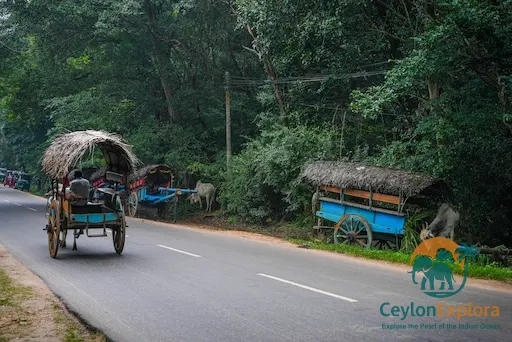
Dumbara weaving is produced exclusively in two villages, Kalasirigama and Alokagama, in the Dumbara Valley near Kandy. The Kinnara community has woven mats and wall hangings with geometric patterns here for centuries, traditionally supplying the royal palace of the Kandyan Kingdom. The craft is inscribed on UNESCO's Representative List of Intangible Cultural Heritage. This is a geographically specific designation: mats sold in Kandy city as "Dumbara weaving" should come from those two villages to carry that name.
Beeralu lacemaking is practised in coastal towns of the southern belt: Galle, Weligama, Dikwella, and Matara. The name derives from the Portuguese word bilro (bobbin); the craft was introduced by Portuguese noblewomen in the mid-16th century and further encouraged under Dutch colonial rule in the 17th century. It is bobbin lace, not needlepoint. The "Point de Venise" comparison sometimes seen in tourism writing is inaccurate. A government-operated centre in Weligama employs approximately 200 workers and is open to visitors.
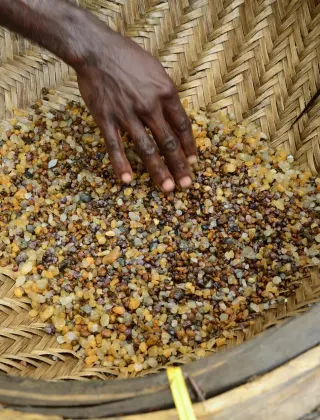
Ratnapura (meaning "City of Gems" in Sinhala) is the centre of Sri Lanka's gem trade, approximately 100 km southeast of Colombo in Sabaragamuwa Province. Gems are found in alluvial gravel deposits (illam) in riverbeds and paddy fields. Principal stones include blue sapphire, star sapphire, cat's-eye chrysoberyl, alexandrite (a chrysoberyl that shifts from green in daylight to red under incandescent light), ruby, and yellow sapphire. The National Gem and Jewellery Authority operates a museum in Ratnapura; gem pit visits and washing experiences are available through local operators.
Food and Festival Eating
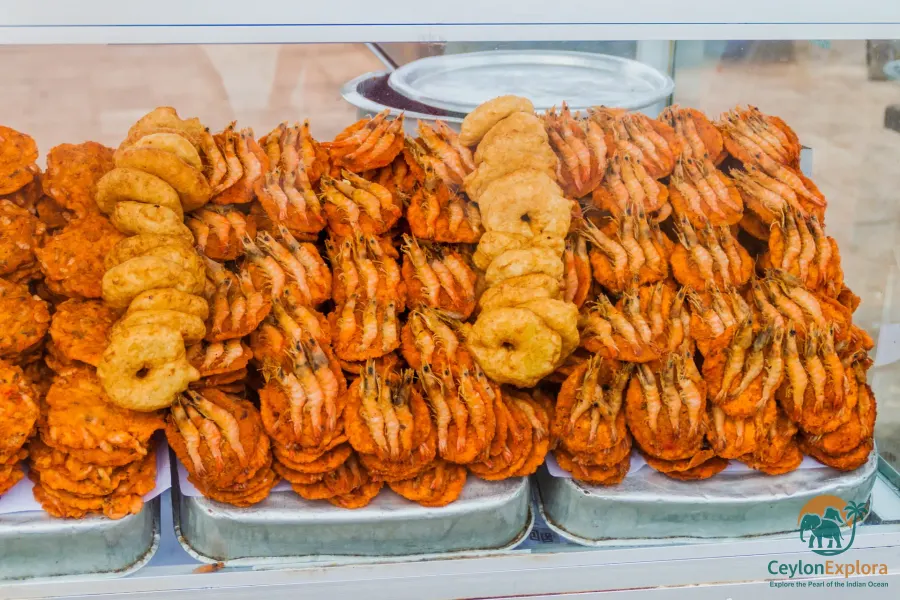
Kiribath (milk rice) is rice cooked with thick coconut milk until it sets into a firm cake, then cut into diamond shapes and served. It is the ritual food of the Sinhala and Tamil New Year and is eaten at the astrologically precise minute set each year by astrologers. It also appears at weddings, housewarmings, the first solid food given to an infant, and on the first day of each calendar month in traditional households. It is served with lunu miris (chilli and onion sambol) and pol sambol (scraped coconut with chilli and lime): the sweet rice with sharp sambol is the traditional pairing.
Kavum (oil cakes) are deep-fried cakes made from rice flour and kithul treacle (from the kithul palm). Several types exist; konda kavum with its raised centre is the most common. Kokis are crisp, lacy fried snacks made by dipping a decorative iron mold into a rice flour and coconut milk batter. Both are strongly associated with New Year and are sold year-round in bakeries. Kokis is of Dutch colonial origin, its name derived from the Dutch word for cookie.
Dansalas, Vesak free food stalls, are set up by community groups, businesses, and individuals along roadsides throughout Vesak Poya. Full rice and curry meals, tea, string hoppers, and sweets are distributed to all passers-by at no charge. Visitors are free to stop and eat; no money is exchanged. Some dansalas are funded by Muslim and Christian business owners as gestures of goodwill, making the tradition more inclusive in practice than its Buddhist merit-making origins might suggest.
Temple Etiquette

The standard dress requirement at any Buddhist temple is covered shoulders (no sleeveless tops or off-shoulder clothing) and covered knees (no shorts or short skirts). Sarongs are available to borrow at the entrances of major temples including the Temple of the Tooth in Kandy. Shoes and socks must be removed before entering any temple building; leave them at the designated rack at the gate. Temple stone floors become extremely hot in direct midday sun, making early morning or late afternoon the more comfortable visiting times.
Do not photograph a Buddha statue from behind. Position yourself facing it or to the side. Do not point your feet toward a Buddha statue; sit cross-legged or with legs angled away. Do not touch a statue or lean against it for photographs. When leaving a shrine room, back out or exit sideways rather than turning your back to the image. Do not hand anything directly to a monk if you are female: place items on a surface or wait for the monk to extend a cloth. Avoid physical contact between couples (embracing, kissing) on temple grounds.
On Poya days, temples are more crowded than usual and the atmosphere is devotional. At the Temple of the Tooth, three daily pujas are held: morning (around 5:30 am), midday (around 9:30 am), and evening (around 6:30 pm), each announced by the beating of drums. During puja, access to the inner relic chamber is restricted to the devotee queue; tourists observe from viewing galleries on the upper floor.
Cultural Context Worth Knowing
Sri Lanka is not a monocultural Buddhist country. By religion, approximately 70% of Sri Lankans are Buddhist, 12.6% Hindu, 9.7% Muslim, and 7.4% Christian (2012 Census). Jaffna's Hindu temple culture, the Eastern Province's mosque traditions, and the Burgher Christian heritage of Colombo are all part of Sri Lanka. The Tamil Deepavali, the Muslim Eid celebrations, and the Catholic traditions of Negombo's fishing communities are as much a part of Sri Lanka as the Kandy Perahera.
Contact Ceylon Explora at hello@ceylonexplora.com or via WhatsApp at +94 71 777 7558 if you are timing a visit around a specific festival or cultural event. Perahera dates, Poya timing, and New Year periods all affect accommodation availability and require advance planning. We can build an itinerary that puts you in the right place at the right time.
Festival days are crowded. Roads close around processions, rooms near the route fill early, and the best viewing spots are taken well before the start. Planning ahead with a reputed company takes care of this. Ceylon Explora books your hotels at good rates with a choice of options, gives you a dedicated vehicle and a professional driver-guide who knows the route and the timing, and brings local knowledge of temple etiquette, so you can attend as a respectful guest and enjoy the occasion from start to finish.




From Fellow Travellers
Comments
No comments yet
Been here, or planning your own trip? Share your experience below and help the next traveller.
Leave a Comment
Comments are reviewed before publishing. No links, please. Email is optional and never shown.