
Wildlife in Sri Lanka: A Guide to National Parks and Safaris
Sri Lanka is one of the highest-biodiversity islands on Earth relative to its size. It holds over 30 endemic bird species, a leopard subspecies found nowhere else in the world, and the largest documented gatherings of wild Asian elephants on the planet. The national park network covers roughly 12% of the island's land area and ranges from lowland dry-zone scrub to montane rainforest. For international visitors, the challenge is not whether to do wildlife, but choosing which parks suit the time of year and what you actually want to see.
This guide covers the six parks and reserves that matter most for first-time and returning visitors, with honest notes on sighting reliability, current conditions, and what to budget.
Yala National Park
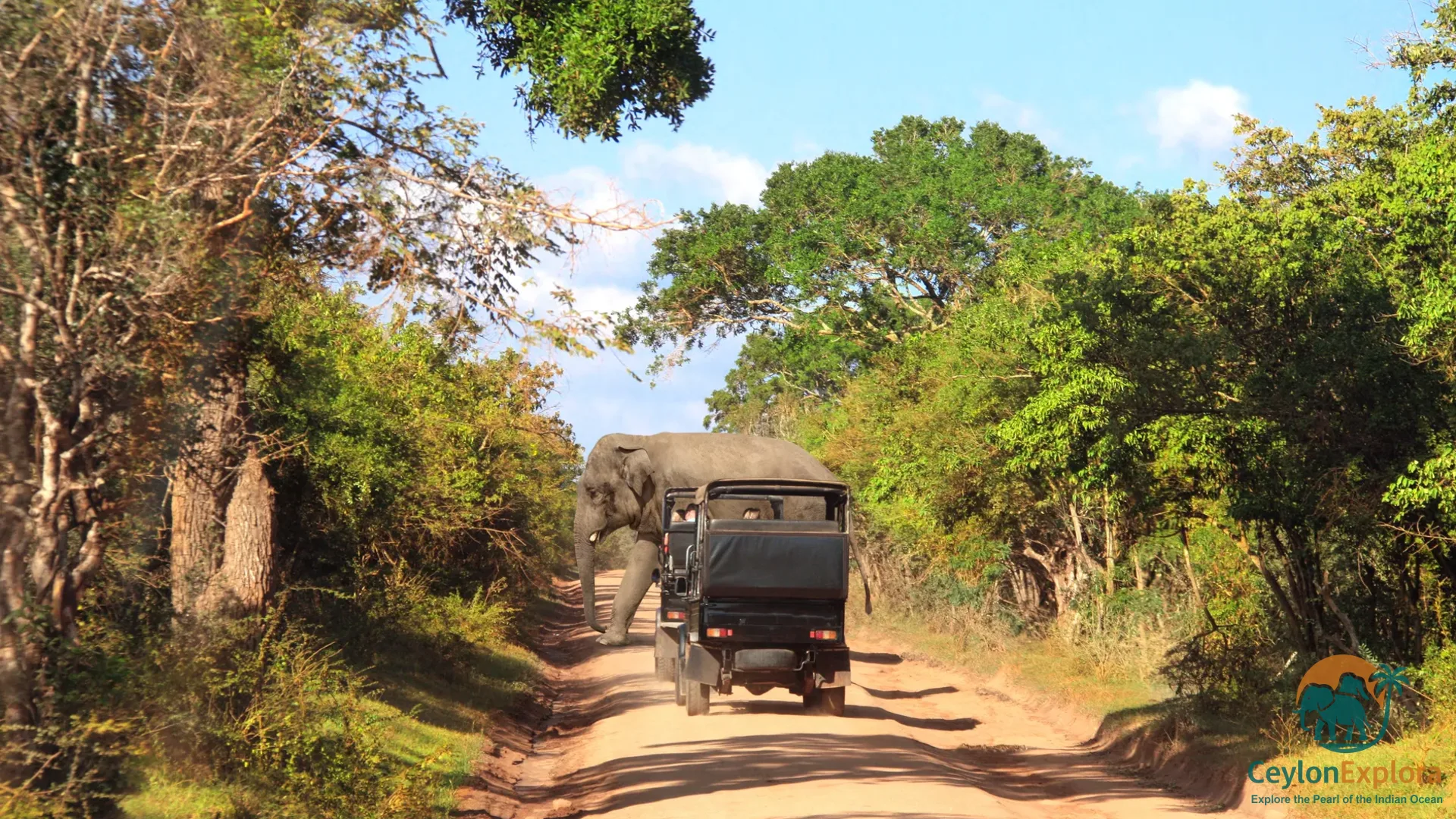
Yala is Sri Lanka's most visited national park and the primary destination for anyone hoping to see a leopard. Block 1, the only section open to regular tourist safaris, covers approximately 140 sq km out of the park's total 979 sq km. The Sri Lankan leopard (Panthera pardus kotiya) reaches among the highest recorded densities globally within Block 1, with peer-reviewed camera-trap studies placing approximately 60 to 90 individuals in the block at a density of around 0.5 per sq km. The commonly repeated tourism figure of "one per square kilometre" is a rounded exaggeration of the peer-reviewed data.
Beyond leopards, Yala holds what is sometimes called Sri Lanka's "Big 5": Sri Lankan elephant, sloth bear, mugger crocodile, wild water buffalo, and the leopard. Sloth bears are most reliably seen from June to July during the palu fruit season. Wild water buffalo bulls can exceed 1,000 kg and are most often found in the wetland sections of the park. Spotted deer (chital) are the most numerous large mammal and serve as the main prey base for the leopard population.
Best months: February to July. May and June offer drier conditions with animals concentrated at water sources and significantly fewer jeeps than the December to April peak. The park typically closes around September 1 for annual maintenance and reopens around November 1, though exact dates vary each year. Confirm closure dates before booking.
Practical information:
Gate opens: 6:00 am. Arrive by 5:30 am to queue for the first entry.
Safari sessions: Morning (6:00 am start) and afternoon (2:00 pm start). Morning is strongly preferred for wildlife photography as heat haze makes photography difficult after 9:00 am.
Foreign entry fee: Approximately $25 to $35 USD per person before service charge and VAT (as of 2025/2026; verify current rate before booking as fees change regularly).
Jeep hire: $40 to $55 USD per jeep for a half-day; $60 to $85 USD for a full day. You cannot self-drive; all jeeps require a licensed tracker-guide. Private jeep hire gives you control over pace and waiting time, which matters considerably at leopard sightings.
Tip for your driver/tracker: Approximately $3 to $5 USD per person per safari, paid in LKR cash ( Optional - Based on the service provided ) .
A current conservation concern: Yala Block 1 suffers from overtourism, with dozens of jeeps converging on single leopard sightings. This habituation and crowding is affecting leopard behaviour. Block 5 of Yala offers a quieter, less-crowded alternative with similar species. Ask your operator about access.
Minneriya National Park and The Gathering
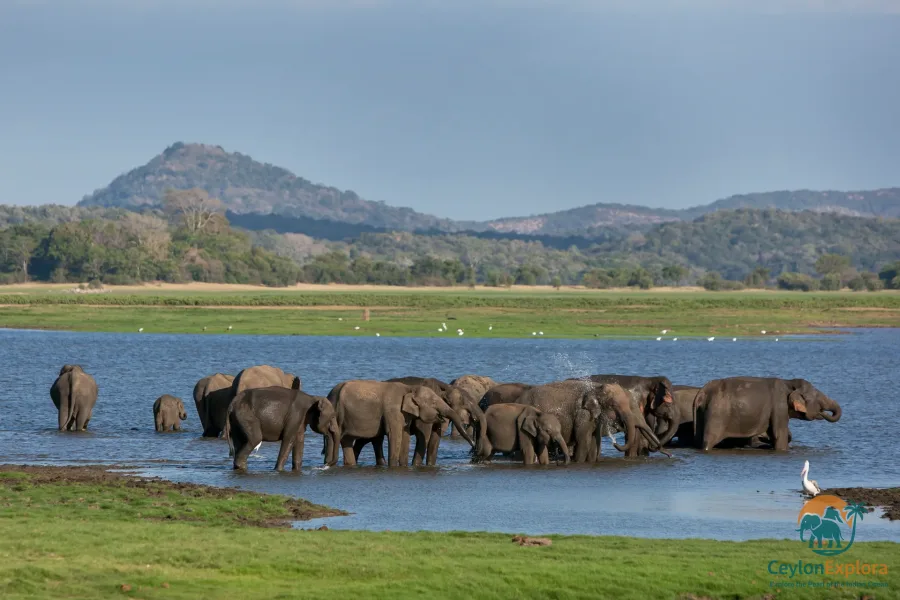
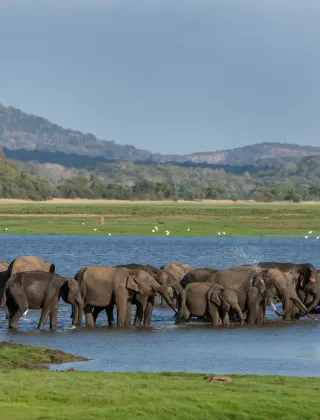
Minneriya, covering approximately 88.9 sq km in the north-central zone, is the site of one of the largest documented gatherings of wild Asian elephants anywhere on Earth. From July to October each year, as the water level in the Minneriya Tank drops during the dry season, it exposes fresh grassland on the lake bed. Elephants from surrounding forest reserves converge on this grazing ground in groups that can reach 150 to 400 individuals visible simultaneously. August and September are typically the peak weeks.
This is not a curated event. The elephants arrive on their own schedule, and individual group sizes vary day to day based on water levels and herd movement. Sightings of large aggregations are common during the season but not guaranteed on any specific day. Other residents include spotted deer, sambar, toque macaque, jackal, painted stork, and lesser adjutant stork. Leopards are present but rarely observed.
Practical information:
Best months: July to October, peak in August to September.
Foreign entry fee: Approximately $25 to $43 USD per adult (fees are reported to be higher during peak Gathering season; verify current rate).
Getting there: Minneriya is conveniently located between Sigiriya and Polonnaruwa, making it straightforward to combine with a cultural triangle visit.
Udawalawe National Park
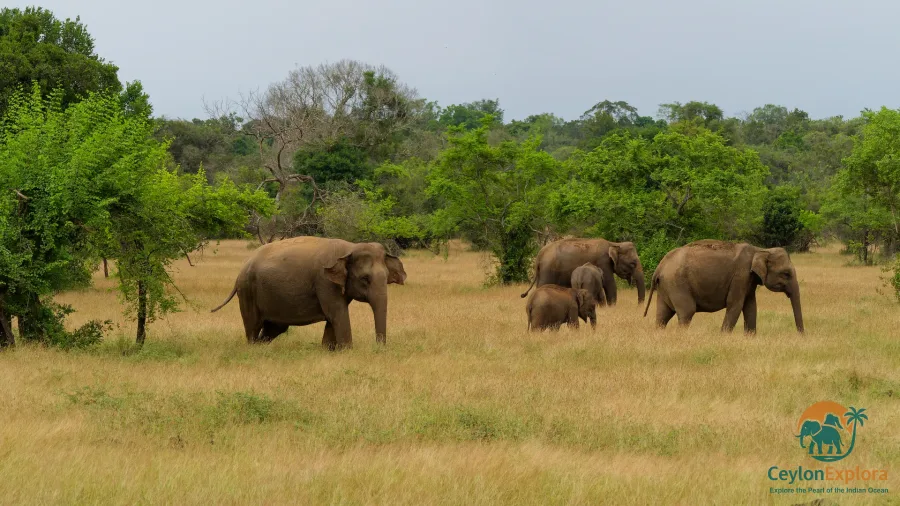
Udawalawe, covering approximately 308 sq km in the southern foothills, is the most reliable park in Sri Lanka for elephant sightings year-round. Around 600 resident elephants use the park, and herds of 30 to 50 are regularly seen on open grassland near the reservoir. Unlike Yala, Udawalawe does not have an annual closure and receives consistent wildlife traffic throughout the year.
Within the park boundary sits the Elephant Transit Home (ETH), operated by the Department of Wildlife Conservation since 1995. The ETH rescues orphaned and injured elephant calves, rehabilitates them with minimal human contact, and releases them into the wild at approximately five years old. Public feeding viewings are held several times daily (historically at 9:00 am, 12:00 noon, 3:00 pm, and 6:00 pm, though the schedule has been revised in recent years). Confirm current times with the DWC or your hotel before visiting. Entry is separate from the park entry fee. No physical contact with the elephants is permitted and none is offered. The ETH is a rehabilitation facility, not an elephant interaction centre.
Practical information:
Best months: Year-round, with May to September offering better concentration of animals at water sources.
Foreign entry fee: Approximately $25 to $43 USD per adult (as of 2025; verify current rate).
Getting there: Approximately 165 km from Colombo; 3 to 4 hours by road. Commonly combined with a southern coast visit (Mirissa, Tangalle, Galle).
Wilpattu National Park
Wilpattu is Sri Lanka's largest national park at approximately 1,317 sq km, but it receives a fraction of Yala's visitor numbers. It was closed in 1988 due to the civil war, had a brief partial reopening in 2003, and was not consistently accessible to tourists until 2010. Infrastructure took years to develop after full reopening. That slower recovery has kept crowds low, which is now its main advantage.
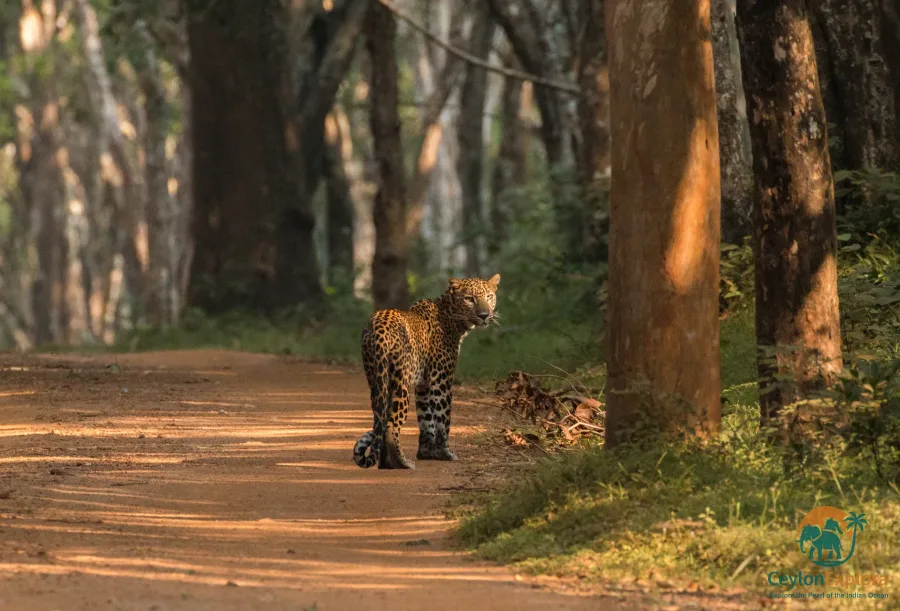
The park's signature habitat is its "villus," natural water basins that collect rainwater and attract wildlife in the dry season. Leopards are the primary draw, and Wilpattu is considered the second-best park in Sri Lanka for leopard sightings after Yala. Sloth bears are reported to be more reliably seen here than in Yala by some operators, particularly outside the Yala season. Sri Lankan elephants, spotted deer, sambar, mugger crocodile, and jackal are all resident.
Practical information:
Best months: May to early September (dry season, animals concentrate at villus).
Foreign entry fee: Approximately $21 USD per adult (verify current rate).
Getting there: Close to Anuradhapura, approximately 4 to 5 hours from Colombo. Best combined with the ancient cities of the north-central zone.
Bundala National Park
Bundala, covering approximately 62.1 sq km on the southern coast, was designated Sri Lanka's first Ramsar Wetland of International Importance in 1990. It holds 197 recorded bird species, including painted stork, lesser adjutant stork, spot-billed pelican, Asian spoonbill, and a range of migratory waders. The park is a short drive from the Yala entrance and is often done as a morning add-on.
Bundala historically attracted large winter-season flocks of greater flamingo from the Rann of Kutch, India, sometimes exceeding 1,000 birds. Flamingo numbers have reportedly declined significantly in recent years. Current sighting reliability is uncertain; do not visit Bundala with flamingo sightings as the primary expectation. The park remains worthwhile for its range of waterbirds, lagoon landscapes, and sea turtle nesting beaches.
Foreign entry fee: Approximately $10 to $25 USD per adult (verify current rate; reported figures vary considerably).
Sinharaja Forest Reserve
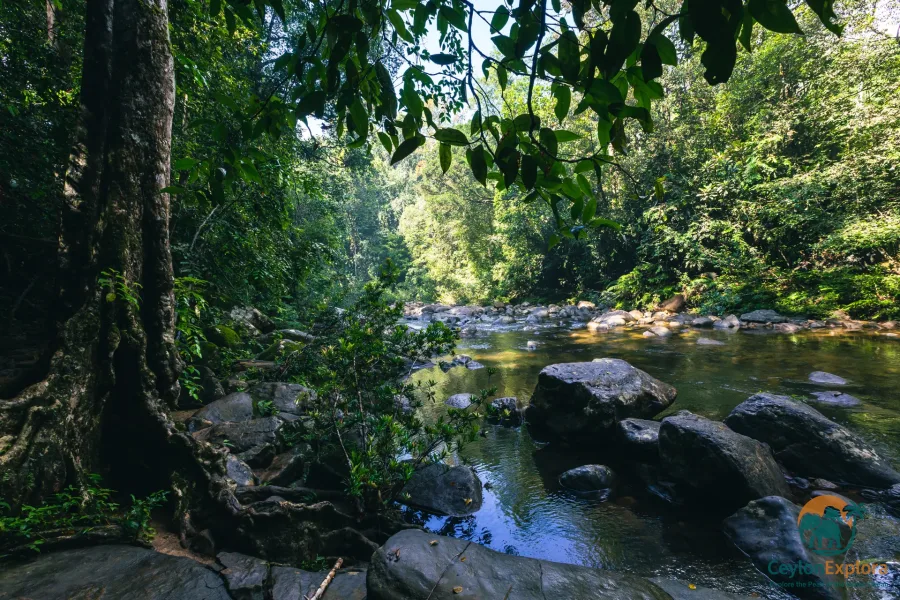
Sinharaja is not a safari destination. It is Sri Lanka's largest surviving lowland rainforest and one of the world's most important biodiversity hotspots, covering approximately 88.6 sq km in its core UNESCO World Heritage Site boundary. UNESCO designated it a World Heritage Site in 1988. Over 60% of its tree species are endemic to Sri Lanka, and 26 of the island's 33 endemic bird species have been recorded here.
The most practical reason to visit Sinharaja is its bird life and mixed-species feeding flocks. In the early morning, feeding flocks of 10 to 15 species move through the understorey together, including the Sri Lanka Blue Magpie, Red-faced Malkoha, Green-billed Coucal, and Sri Lanka Scimitar Babbler. The Green-billed Coucal is one of Sri Lanka's rarest endemic birds and Sinharaja is its last reliable stronghold. Mammals include the purple-faced langur, rusty-spotted cat, fishing cat, and Sri Lankan leopard, though large mammals are rarely observed.
Entry is via the Kudawa entrance (southern side) or the Pitadeniya entrance (northern side). A guide is mandatory and is assigned at the entrance; you cannot enter the core zone without one. Trails are muddy year-round; proper footwear is non-negotiable. The best visiting time is early morning, from the gate opening until around 10:00 am.
Getting there: Sinharaja is approximately 150 km from Colombo (around 3.5 to 4 hours), typically accessed via Ratnapura or Deniyaya.
A Note on Whale Watching
Sri Lanka's southern coast, particularly Mirissa, is a well-known spot to see blue whales. The resident northern Indian Ocean blue whale population (Balaenoptera musculus indica) is observable off Mirissa from November to April, with sightings most concentrated December to March, and off Trincomalee roughly March to September. Researchers have individually identified over 80 animals from fluke markings.
Sighting numbers vary by season and by boat. If whale watching is a priority for your trip, get current-year sighting reports from operators before booking around it, and choose an operator that follows responsible-distance guidelines around the animals.
Planning a Wildlife Itinerary
The parks split roughly by location and season:
South and south-east (Yala, Udawalawe, Bundala): Accessible together on a southern circuit. Best conditions February to July for Yala; Udawalawe is year-round.
North-central (Minneriya, Wilpattu, Anuradhapura cultural sites): Natural pairing for a single north-central loop. Minneriya peaks July to October. Wilpattu peaks May to September.
Rainforest (Sinharaja): Best added to a southern or Kandy-centred itinerary. Can be combined with a hill country trip via Ratnapura.
For a trip that covers the main wildlife parks alongside cultural and coastal highlights, contact Ceylon Explora at hello@ceylonexplora.com or via WhatsApp at +94 71 777 7558. We route itineraries to match park seasons, so you are not driving hours to a park in its worst weather window.



From Fellow Travellers
Comments
No comments yet
Been here, or planning your own trip? Share your experience below and help the next traveller.
Leave a Comment
Comments are reviewed before publishing. No links, please. Email is optional and never shown.