
Sri Lanka's weather is more nuanced than most travel guides suggest. The island has two distinct monsoon systems operating on opposite coasts, which means some part of Sri Lanka is almost always in a dry period. Understanding which part is dry when is the most important planning decision you will make.
The short version: December through March is the most reliable window for the classic circuit covering the south coast, hill country, and cultural triangle. May through September is the correct window for the east coast. Getting this backwards is the most common and most avoidable mistake in Sri Lanka travel planning.
Sri Lanka's Two Monsoon Systems
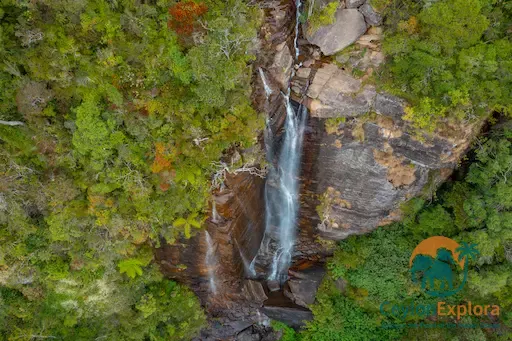
The central mountain range, rising to a maximum of 2,524 metres at Pidurutalagala, acts as a climate wall splitting the island's weather into two zones. Rain driven from the southwest deposits on the windward slopes and the south and west coasts while leaving the east coast and cultural triangle comparatively dry on the same day.
The Southwest Monsoon (Yala season) runs from May through September, with the heaviest rainfall in May and June. It affects the south coast, west coast, and hill country: Colombo, Galle, Bentota, Mirissa, Kandy, and Nuwara Eliya all fall within this zone. The windward slopes of the hill country receive up to 2,540 mm of rain during this period. The east coast and cultural triangle (Sigiriya, Dambulla, Polonnaruwa) remain comparatively dry.
The Northeast Monsoon (Maha season) typically runs from late November through February, with the most pronounced effects in November through January. It affects the north and east coasts: Trincomalee, Batticaloa, Jaffna, and Arugam Bay. During this same period, the southwest coast enters some of its driest and most pleasant months.
Between the two monsoons, two inter-monsoon transition periods bring the closest thing to island-wide unpredictable weather: late March through April, and October through early November. Both periods typically bring short, intense afternoon thunderstorms that can appear anywhere on the island. Mornings during the inter-monsoon are generally clear and sunny.
The Classic Circuit: December to March

For travellers doing the standard itinerary of Colombo, the cultural triangle, hill country, and the south coast, December through March is the most reliable window. February and March are the strongest months: low rainfall, lower humidity, clear skies, and the peak blue whale season off Mirissa running simultaneously.
December is excellent but comes with caveats: it is the most expensive and most crowded period, particularly on the south coast and in Ella. Accommodation in popular spots fills in advance. Yala National Park sees its highest jeep numbers from December through April, with up to 600 vehicles entering Block 1 on busy days. January and February offer the same good weather with slightly fewer domestic tourists, though prices remain elevated through February.
East Coast: May to September
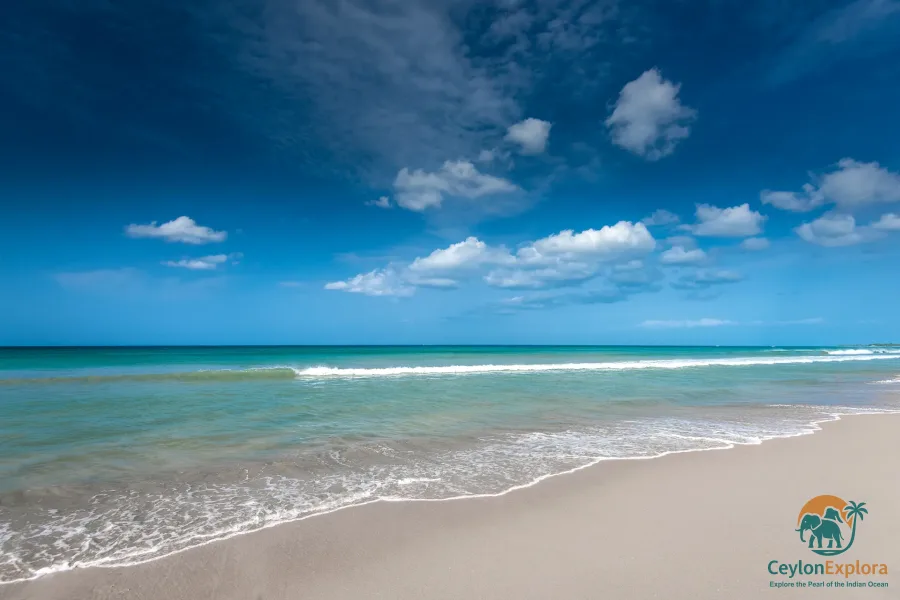
The east coast, Arugam Bay, Trincomalee, Nilaveli, and Pasikudah, is in peak dry season exactly when the south coast is wet. Travellers who skip Sri Lanka in June because they have read about "monsoon season" are missing the east coast at its best: calm seas, excellent visibility for diving, and Arugam Bay's surf in good shape.
May through September is when Pigeon Island's diving (off Nilaveli, approximately 1 km from shore) is at its best. Visibility regularly exceeds 20 metres. The same window opens up Trincomalee's harbour bays and the wreck diving off the coast, including accessible World War II-era wrecks.
Month-by-Month
January
High season on the south and west coasts. Colombo records approximately 71 mm of rainfall, one of its driest months. Coastal temperatures range from 26 to 30°C. Nuwara Eliya at 1,868 metres altitude averages lows near 9°C on cold nights; bring a layer. Whale watching at Mirissa is active with reliable sightings. Yala is in dry-season conditions with good leopard visibility. The hill country and cultural triangle are clear. Peak prices and crowds throughout.
February

Colombo's second driest month, averaging 40 to 69 mm. Broadly considered the best all-round month: clear skies across the south coast, cultural triangle, and hill country simultaneously. Blue whale sightings at Mirissa peak in February and March: these are among the largest animals on Earth at up to 30 metres. Sigiriya daytime temperatures reach 32 to 34°C; climbing by 7:00 am manages the heat. Adam's Peak pilgrimage season in full swing with clear summit conditions and high probability of seeing the sunrise shadow phenomenon.
March
Excellent weather continues. Sperm whale sightings at Mirissa are most common this month alongside blues. Yala's dry season peaks with excellent leopard conditions as waterholes concentrate movement. The cultural triangle is at its best. Sigiriya temperatures begin climbing toward 35°C by late March; starting at the 6:30 am gate opening is the effective response. Prices remain high.
April
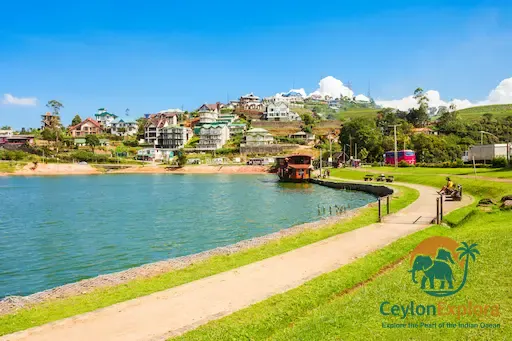
The first inter-monsoon transition month. Mornings are generally clear; short afternoon thunderstorms are possible anywhere on the island. Daytime temperatures in the cultural triangle can reach 35°C, the hottest month for Sigiriya. The south coast is still usable and represents the last good beach window before the southwest monsoon arrives in May. The east coast is opening up: Trincomalee and Pigeon Island become accessible in late April.
The Sinhala and Tamil New Year falls on April 13 to 14 each year: the largest domestic travel period in Sri Lanka. Roads are busy, accommodation in beach areas fills with local tourists, and prices rise. Book well in advance or plan around the dates. Arugam Bay's surf season begins in April.
May
The southwest monsoon arrives. South and west coasts become wet, though rain typically comes in concentrated afternoon bursts rather than all-day drizzle. The east coast enters its prime season: Trincomalee, Arugam Bay, Batticaloa, and Pasikudah. Pigeon Island diving season opens. Vesak Poya (the full moon of May) commemorates the birth, enlightenment, and passing of the Buddha, and is the country's largest Buddhist festival, marked by lanterns and illuminated pandols nationwide. The Adam's Peak pilgrimage season closes with Vesak Poya. Hotel prices on the south coast drop by 30 to 50% for the low season.
June
Southwest monsoon in full effect on south and west coasts: Colombo records approximately 341 mm in June, among its wettest months. East coast: peak season. Arugam Bay surf improves as the monsoon swell builds. Poson Poya, the full moon of June, commemorates the arrival of Buddhism in Sri Lanka and is celebrated with particular significance at Mihintale, where the religion's founder Mahinda Thero first encountered King Devanampiya Tissa. The cultural triangle (Sigiriya, Polonnaruwa, Dambulla) remains comparatively dry on the leeward side of the mountains, worthwhile if your itinerary is cultural-triangle-focused.
July
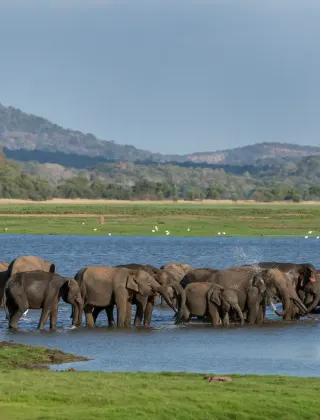
East coast at peak. Arugam Bay sandbars are fully formed: Main Point is a long right-hand point break delivering rides of 200 to 500 metres, and July through September is when it performs most consistently. The Minneriya Elephant Gathering begins in July as the dry season exposes grassland around the ancient reservoir. Kandy Esala Perahera, Sri Lanka's largest religious procession, runs in late July through early August (exact dates shift with the lunar calendar annually; check kandyesalaperahera.com for the confirmed dates each year). Book Kandy accommodation three to six months in advance for the final nights of the procession.
August
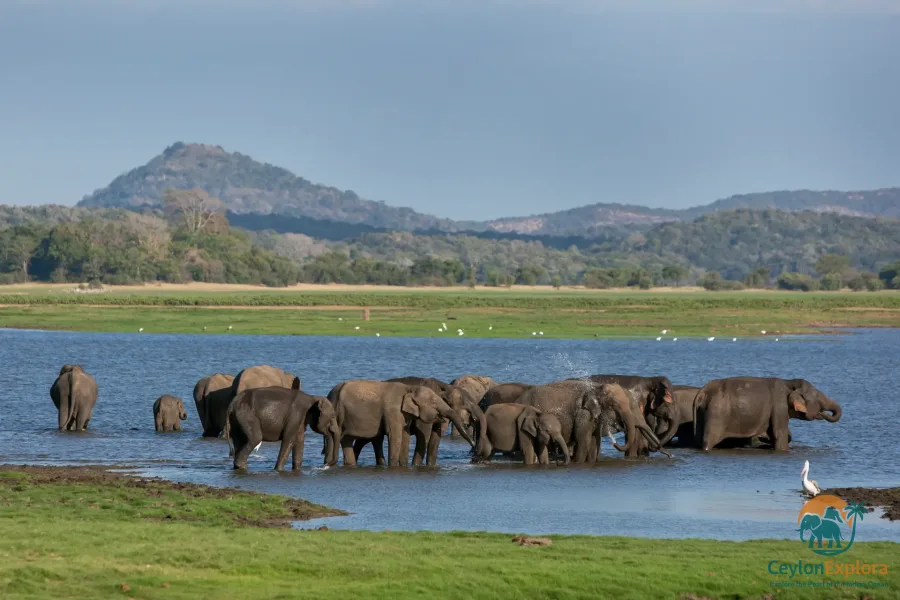
The peak of the Minneriya Elephant Gathering: the single best month to see large numbers of wild elephants, with 200 to 300 or more animals visible simultaneously around the Minneriya tank. The nearby Kaudulla National Park hosts a similar gathering and rangers redirect visitors between the two parks based on where concentrations are higher on a given day. Kandy Esala Perahera typically runs into early-to-mid August. East coast remains excellent. Arugam Bay surf is at its most consistent.
September
East coast winding down. The Minneriya gathering continues into September if rains are delayed. Yala National Park Block 1, the most wildlife-dense section, closes annually for management, typically from September 1 to approximately October 15. Blocks 5 and surrounding parks remain accessible. The south coast is still in the monsoon period but landscape conditions are at their greenest, waterfalls are full, and prices remain at low-season rates. Arugam Bay surf season still active through September.
October
The second inter-monsoon transition and Sri Lanka's most genuinely difficult month to plan around. Colombo records approximately 355 mm: its single wettest month. Afternoon thunderstorms are possible across the island simultaneously. Both coasts are in transition: the east coast's dry season has ended and the northeast monsoon is building, while the south coast's monsoon is easing. Yala Block 1 typically reopens mid-October. The Minneriya gathering ends. This is the one month where the whole-island "every corner is somewhere dry" logic partially breaks down.
November
The south and west coasts clear rapidly through November. By mid-to-late November, Mirissa and Bentota are in good condition. Whale watching season off Mirissa opens in November and runs through April. This is a useful shoulder month: south coast weather improving, prices below December peak levels, and accommodation more available than in high season. The northeast monsoon affects the north and east coasts, closing Trincomalee and Pigeon Island for diving.
December
Full high season. The south coast, hill country, and cultural triangle are in excellent condition. Colombo averages 140 to 180 mm in December: significantly wetter than January and February but a fraction of the monsoon months. Whale watching is active off Mirissa. Ella and Nuwara Eliya are popular Christmas and New Year destinations. Prices peak from mid-December through January. Book accommodation three to six months ahead for Christmas and New Year weeks.
Activity Timing at a Glance
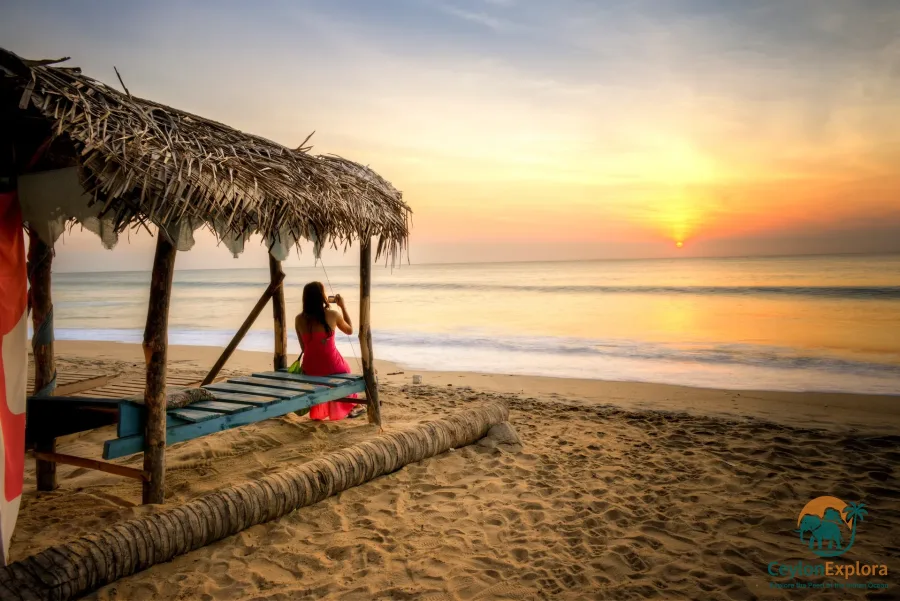
- Blue whale watching (Mirissa): November to April; peak February to March
- Minneriya Elephant Gathering: July to October; peak August
- Yala National Park leopards: February to June (dry season); Block 1 closed approximately September 1 to October 15
- Adam's Peak pilgrimage: December full moon to May full moon; best January to April
- Surfing, Arugam Bay (east coast): April to October; peak July to September
- Surfing, Hikkaduwa, Weligama (south coast): November to April; peak December to January
- Diving, Pigeon Island and Trincomalee: April to October; peak May to September
- Kandy Esala Perahera: late July to early August (exact dates vary annually with lunar calendar)
- Sigiriya climb: year-round; aim to start by 7:00 am March to June when temperatures are highest
Three Misconceptions Worth Correcting
"Monsoon means it rains all day." In Sri Lanka's tropical climate, monsoon rainfall typically arrives as short, intense afternoon or evening bursts lasting one to three hours. Mornings are usually clear and sunny. Colombo's wettest month (October, approximately 355 mm) still delivers most of its rain in concentrated showers, not continuous grey drizzle. Visiting cultural sites in the morning and waiting out afternoon rain at a guesthouse or pool is a workable pattern.
"Avoid Sri Lanka May through September." This advice applies only to the south and west coasts. The east coast is in its peak season during this exact window. Arugam Bay's surf, Trincomalee's beaches, and Pigeon Island's diving are all best from May to September.
"December and January are the best months." They are reliably good months, but they are also the most expensive and most crowded. If your priority is blue whale sightings, February and March are demonstrably better. If it is leopards at Yala, February through April offer better conditions with fewer jeeps than peak December.
Planning Your Trip
Explore regional weather month by month in our Best Time to Visit Sri Lanka planner. The right timing for your trip depends on which regions you are prioritising, which activities matter most, and how you weigh weather certainty against price and crowd levels. Contact Ceylon Explora at hello@ceylonexplora.com or via WhatsApp at +94 71 777 7558. We design itineraries around your actual travel dates and tell you honestly what the weather and activity conditions will be rather than selling you a generic circuit that works better in a different month.





From Fellow Travellers
Comments
No comments yet
Been here, or planning your own trip? Share your experience below and help the next traveller.
Leave a Comment
Comments are reviewed before publishing. No links, please. Email is optional and never shown.