

PRIVATE TOUR
Ceylon Grand Circle
Fifteen days in one clockwise loop: the ancient capitals, the tea highlands, a Yala safari, and the southern coast.
Why You'll Love This Trip
- Anuradhapura's sacred city, including the Sri Maha Bodhi
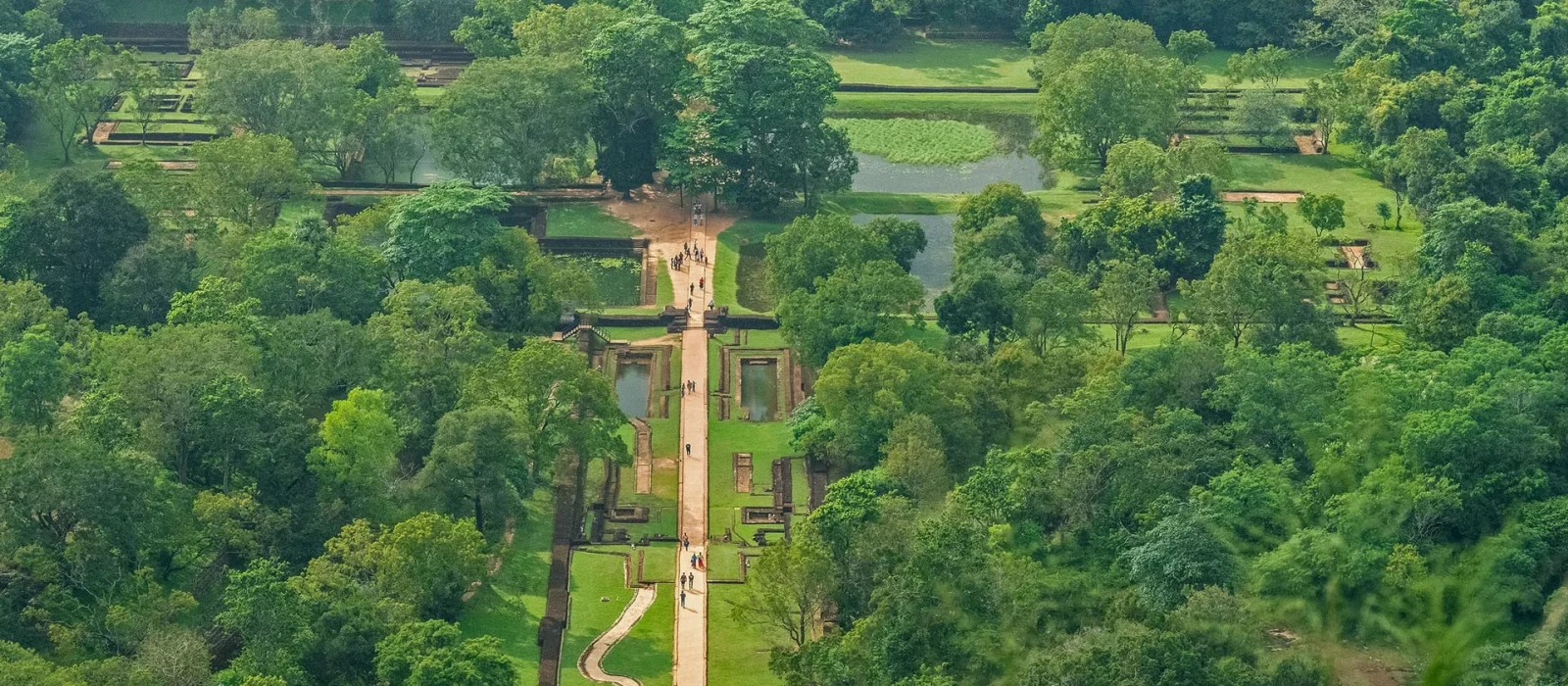
- Sigiriya Rock Fortress at opening time and its 5th-century water gardens
- Polonnaruwa by bicycle, including the Gal Vihara Buddhas
- Dambulla Cave Temple and Kandy's Temple of the Sacred Tooth Relic
- The Nanu Oya to Ella train through the tea estates
- Dawn leopard safari in Yala Block I
- Mirissa whale watching and sunset on the Galle Fort ramparts
Overview
The Grand Circle is one continuous clockwise loop. You land on the west coast, drive north into the dry-zone plains where Sri Lanka's first capitals were built, climb south and east through the tea highlands to 1,868 m, then come back down to sea level on the southern coast and run home along the expressway. No road is driven twice, and no stop is a detour you have to undo the next morning.
Read moreShow less
The shape of the route is also the shape of the island's history. Anuradhapura was the capital for over a thousand years from the 4th century BC. Polonnaruwa replaced it in the 11th. Sigiriya's rock palace sits between them at the 5th. Kandy held the last independent kingdom until 1815 and still keeps the Sacred Tooth Relic. Above Kandy the road climbs into tea country the British planted from the 1860s, then drops through Ella into the dry southern plains where Yala's leopards are, and finally to the water at Mirissa and Galle.
Fourteen nights across nine bases works out at roughly 900 km of driving. It is spread so the longest single transfer is three and a half hours, on day two, and most days are under two and a half. Five of the nine bases get two nights, so you unpack properly rather than living out of a bag. Your driver-guide covers the whole route; the only vehicle you change into is the safari jeep inside Yala, arranged locally on the morning.
Route
15 days round trip from Bandaranaike Airport, through Negombo, Anuradhapura, Sigiriya, Polonnaruwa, Dambulla, Kandy, Nuwara Eliya, Ella, Yala, Mirissa, Galle
Places You'll Visit
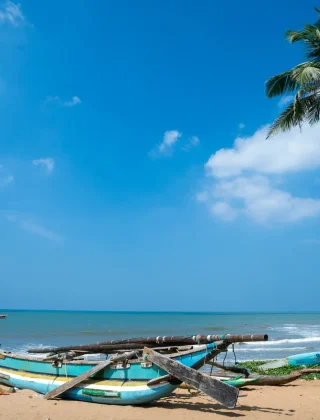
Negombo Beach (Lewis Place)
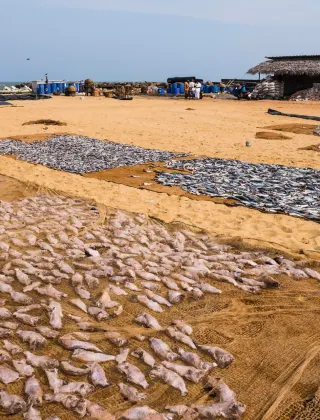
Negombo Fish Market (Lellama)
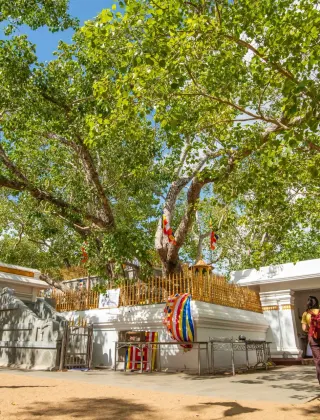
Sri Maha Bodhi
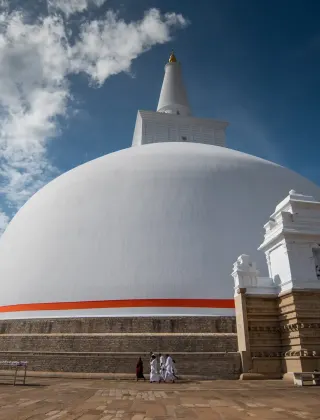
Ruwanwelisaya Stupa

Pidurangala Rock
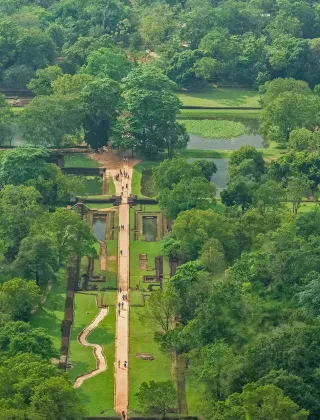
Sigiriya Rock Fortress

Sigiriya Frescoes & Mirror Wall
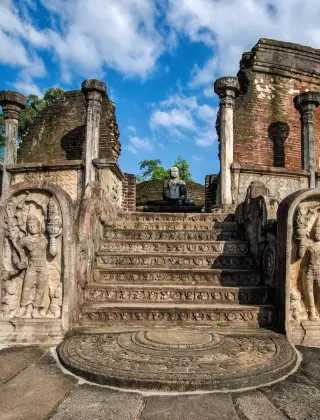
Polonnaruwa Vatadage
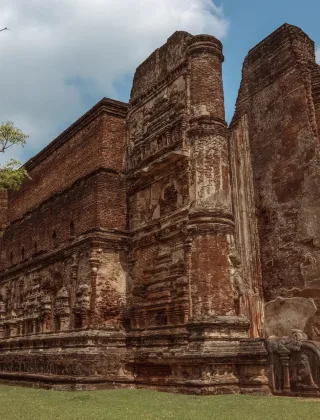
Lankatilaka Vihara Polonnaruwa

Dambulla Cave Temple

Kandy Lake

Temple of the Tooth Relic
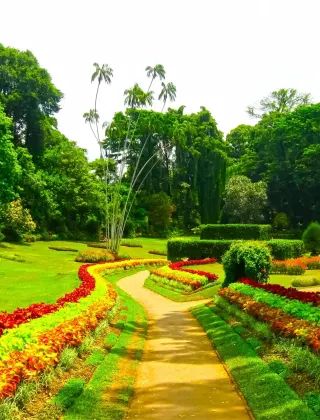
Royal Botanical Gardens Peradeniya
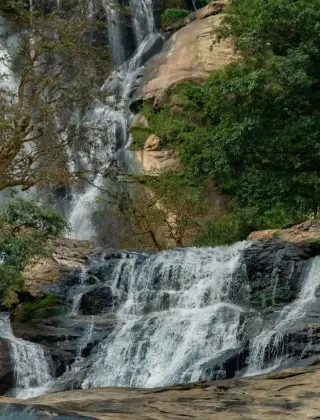
Ramboda Falls

Pink Post Office

Horton Plains National Park
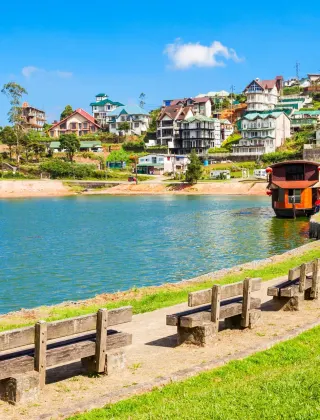
Gregory Lake
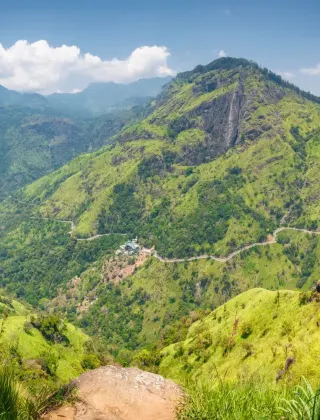
Ella Gap Viewpoint

Little Adam's Peak

Nine Arch Bridge

Ravana Falls
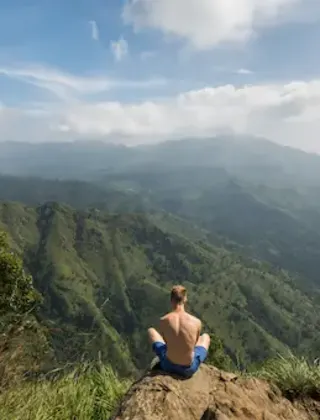
Ella Rock
Tissa Wewa

Yala National Park

Mirissa Beach
Coconut Tree Hill (Mirissa)

Parrot Rock (Mirissa)

Galle Fort

Galle Lighthouse
Day by Day
Day 1
Arrival on the west coast
Bandaranaike Airport to Negombo
8 km, about 20 minutes
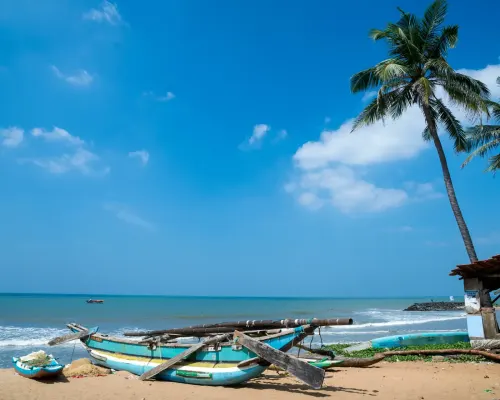
Your driver-guide meets you inside the arrivals hall at Bandaranaike International and drives 20 minutes north to Negombo, so the first day costs almost no road time whatever hour you land. If you arrive in the morning, the Lellama fish market on the lagoon side is busiest before 8am and the beach is a short walk from most hotels. The long drive north starts tomorrow, so this evening is deliberately empty.
- Airport pickup inside the arrivals hall
- Transfer to Negombo, 20 minutes
- Negombo beach or the Lellama fish market
- Evening at leisure
Day 2
North to the first capital
Negombo to Anuradhapura
174 km, about 3 hours 30 minutes
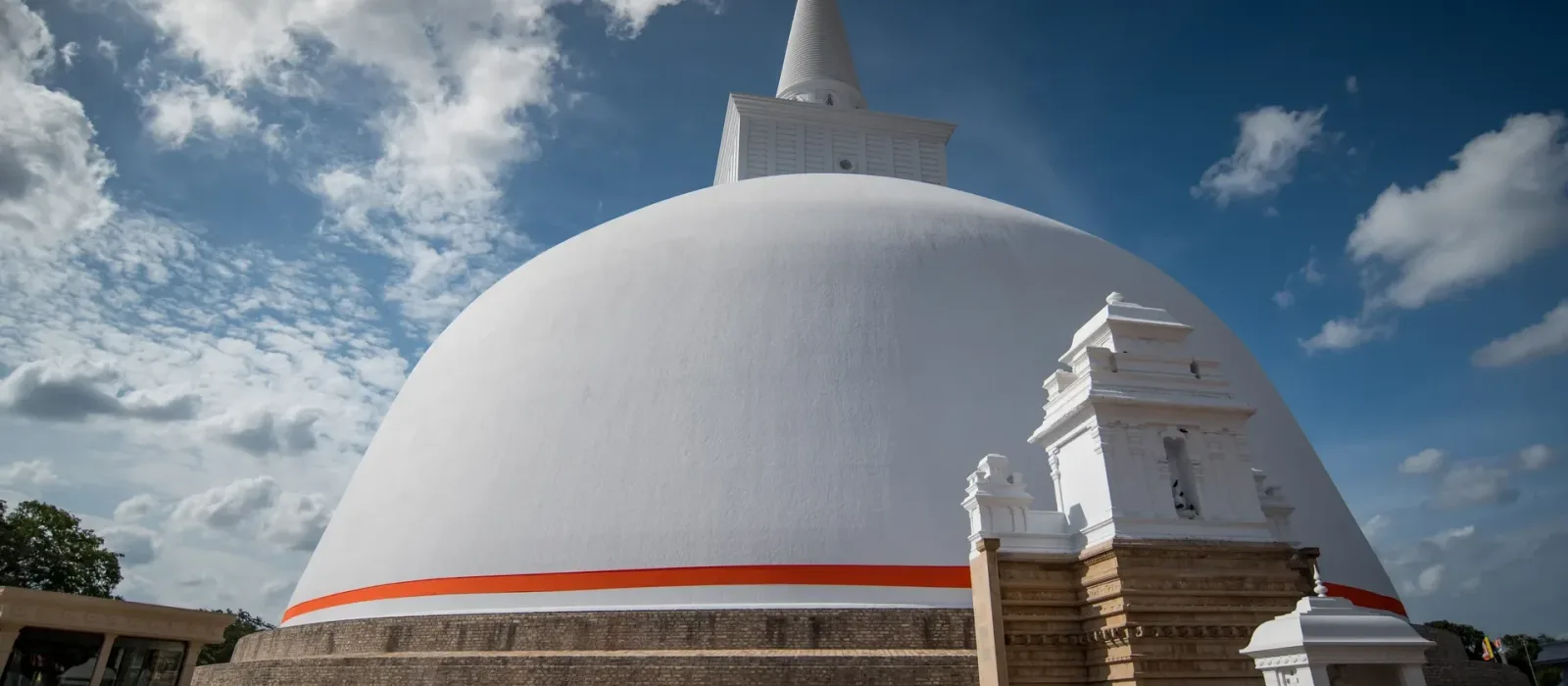
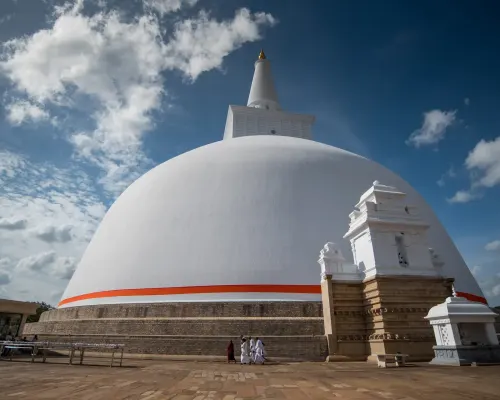
The longest transfer of the trip, and it falls on day two while you are still adjusting anyway. The road runs north through coconut country into the dry zone, where the landscape opens out into tank-fed paddy and scrub. Anuradhapura was the capital for over a thousand years from around the 4th century BC and the sacred city is spread across several kilometres, so the afternoon covers the two you should not miss. The Sri Maha Bodhi was planted in 236 BC from a cutting of the Bodhi tree at Bodh Gaya, which makes it the oldest human-planted tree with a recorded planting date. The Ruwanwelisaya stupa is a short drive on. Both need shoulders and knees covered, and shoes come off at the gate.
- Drive north into the dry zone
- Sri Maha Bodhi
- Ruwanwelisaya stupa
- Sunset over the sacred city
Day 3
Mihintale, then the rock country
Anuradhapura to Sigiriya, via Mihintale
80 km, about 1 hour 30 minutes plus the Mihintale stop
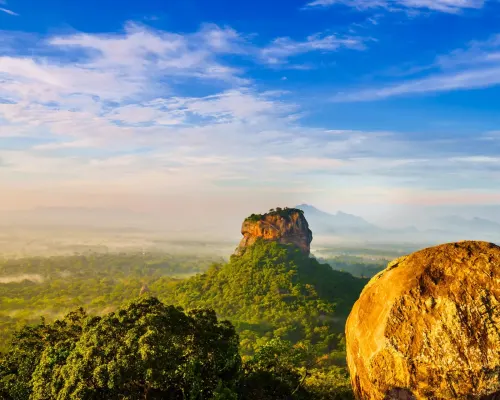
A short morning drive east with one stop. Mihintale is the hill where Buddhism is said to have arrived on the island in 247 BC, and the ascent is 1,840 steps cut in broad shallow flights, which takes most people about 40 minutes. You reach Sigiriya by early afternoon. If the light is good, walk up Pidurangala at around 4pm. It is a rougher scramble than Sigiriya itself, with a boulder section near the top, but it is the rock you photograph Sigiriya from.
- Mihintale hill and its 1,840 steps
- Drive east to Sigiriya
- Optional Pidurangala climb for sunset
Day 4
Sigiriya at opening time, Polonnaruwa after
Sigiriya, with an optional Polonnaruwa excursion
110 km return to Polonnaruwa, about 1 hour each way
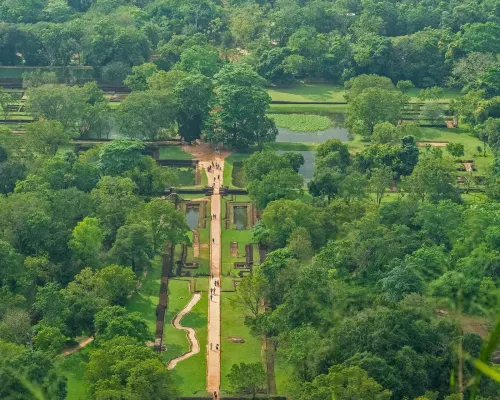
Start at the Sigiriya gate when it opens at 7am, ahead of the heat and the queues on the spiral staircases. The rock stands about 180 m above the plain, the water gardens at its base are among the oldest surviving landscaped gardens in Asia, and the mirror wall still carries visitors' verses scratched into it between the 8th and 10th centuries. You are back down by mid-morning. The afternoon runs an hour east to Polonnaruwa, the capital that replaced Anuradhapura in the 11th century. It is compact and flat, so bicycles hired at the gate are the usual way to cover the Vatadage, Lankatilaka and the Gal Vihara Buddhas cut from a single granite face. Say the word if you would rather keep the afternoon free instead; the excursion is optional, not fixed.
- Sigiriya Rock Fortress from the 7am opening
- Water gardens, frescoes and the mirror wall
- Optional afternoon at Polonnaruwa by bicycle
- Gal Vihara rock-cut Buddhas
Day 5
Cave temple, then into the hills
Sigiriya to Kandy, via Dambulla
91 km, about 2 hours 30 minutes plus the temple stop
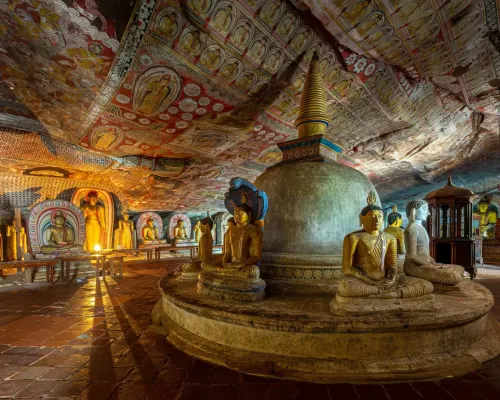
Dambulla is 20 minutes down the road and directly on the way, so it costs nothing in detour. Five caves under an overhanging rock hold around 150 Buddha images and painted ceilings covering roughly 2,100 square metres, and the site has been in continuous use as a temple since the 1st century BC. From there the road climbs south into the Central Highlands and the air changes noticeably in the last half hour into Kandy. You arrive mid-afternoon. The lake circuit is a flat 3.5 km walk if you want to stretch after the drive.
- Dambulla Cave Temple
- Drive south into the Central Highlands
- Kandy Lake circuit on foot

Day 6
Kandy
Kandy
Local driving only
Kandy held the last independent Sinhalese kingdom until the British took it in 1815, and the Temple of the Sacred Tooth Relic is still the centre of the city. Time your visit to one of the three daily puja ceremonies, at 5.30am, 9.30am and 6.30pm, when the chamber holding the relic casket is opened. The Royal Botanical Gardens at Peradeniya, 6 km west, cover 59 hectares and take a comfortable two hours; the avenue of royal palms and the giant Javan fig are the set pieces. An evening Kandyan dance performance with drumming runs about an hour and is worth booking ahead in season.
- Temple of the Sacred Tooth Relic, timed to a puja
- Royal Botanical Gardens, Peradeniya
- Optional evening Kandyan dance performance
Day 7
Up through the tea
Kandy to Nuwara Eliya, via the Ramboda Pass
73 km, about 2 hours 15 minutes plus stops
Only 73 km, but it climbs from around 500 m to 1,868 m and the road tightens into switchbacks past Gampola, so allow for the stops rather than racing it. Ramboda Falls drops 109 m beside the road at roughly the halfway point. Past it the hillsides turn to tea, and a factory visit here is worth doing properly: plucking, withering, rolling, oxidation and firing all happen under one roof, and tasting at the end of that line is the whole point of stopping. Nuwara Eliya evenings run about 10 to 14 °C and most hotels have no heating, so have something warm within reach.
- Ramboda Falls
- Working tea estate and factory visit
- Arrive Nuwara Eliya, 1,868 m
Day 8
Nuwara Eliya, or an early start to World's End
Nuwara Eliya, with an optional Horton Plains morning
64 km return to Horton Plains, about 1 hour 15 minutes each way
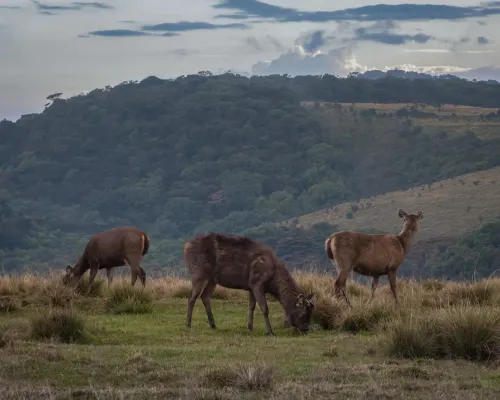
The optional early start is Horton Plains. Leave at 5am to stand at World's End before 9am, after which cloud usually fills the 870 m drop and there is nothing to see. The loop is 9.5 km on mostly level ground, takes about three hours, and passes Baker's Falls on the way round. If you skip it, Nuwara Eliya is a slow morning instead: Gregory Lake, Victoria Park, and a town of 1890s bungalows, a pink brick post office, and a golf course in play since 1889. Afternoons here are free either way.
- Optional 5am departure for Horton Plains and World's End
- Baker's Falls on the plains loop
- Gregory Lake and Victoria Park
- Free afternoon
Day 9
The hill-country train
Nanu Oya to Ella by train, luggage by road
56 km by road; the train runs about 4 hours
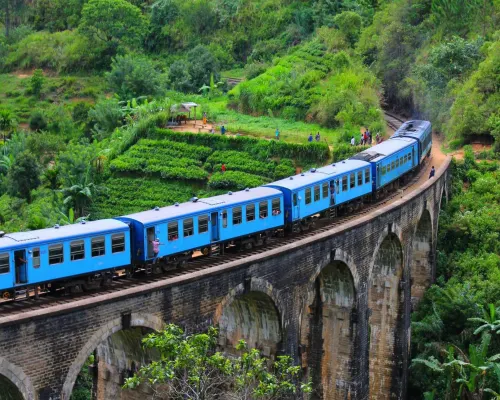
This is the stretch of the Badulla line people come to Sri Lanka for. You board at Nanu Oya, 20 minutes from your hotel, and ride about four hours through tea estates, tunnels and the Demodara loop into Ella. Your driver takes the luggage by road and meets you on the platform, so you travel with a day bag and nothing else. Reserved seats sell out weeks ahead in season; if there are none left, the unreserved second-class carriages are arguably the better ride, with the doors open the whole way. Tell us early if you would rather drive the full 56 km instead.
- Board at Nanu Oya, 20 minutes from the hotel
- Roughly 4 hours through tea estates and the Demodara loop
- Driver meets you at Ella station with the luggage
- Evening in Ella town

Day 10
Ella
Ella
Local driving only
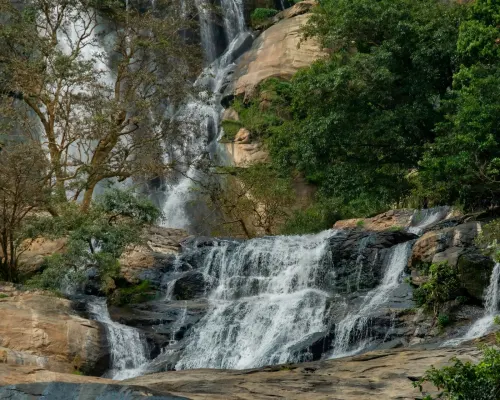
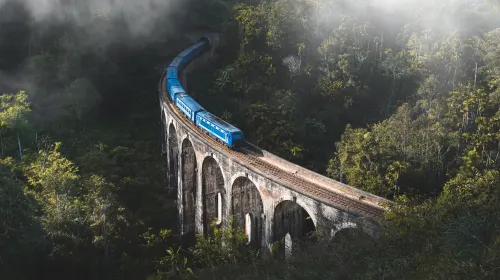
Little Adam's Peak is the gentle one: about 45 minutes up a stepped path to a ridge looking straight into the Ella Gap, and it is best at sunrise. Nine Arch Bridge is a 20-minute walk below it, a 91 m viaduct completed in 1921 and built in stone and brick without steel; check the day's train times at your hotel and be in position ten minutes before one crosses. Ravana Falls, 25 m, is roadside on the Wellawaya road and takes five minutes to see. Ella Rock is the harder option at four to five hours return, and it needs an early start and a guide, because the path off the railway line is unmarked and easy to lose.
- Little Adam's Peak at sunrise
- Nine Arch Bridge, timed to a train crossing
- Ravana Falls
- Optional Ella Rock hike
Day 11
Down to the dry plains
Ella to Tissamaharama, via Wellawaya
90 km, about 2 hours
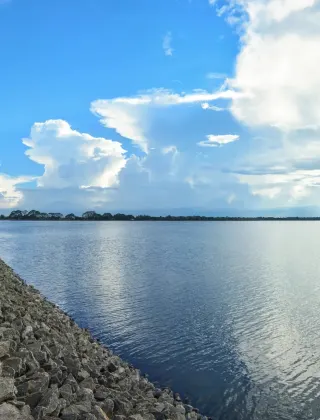
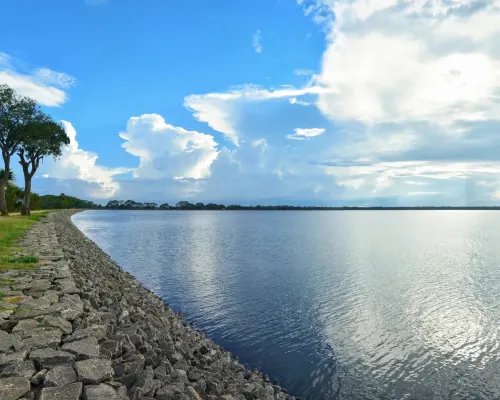
The road drops off the escarpment below Ella in a run of hairpins and the temperature climbs roughly 12 degrees in an hour. By Wellawaya you are in the dry southern plains. Tissamaharama is a tank town with a 3rd-century BC stupa and a lot of birdlife around Tissa Wewa in the last hour of light, which is the right way to spend the afternoon. Check in early and eat early: tomorrow starts before first light.
- Descent off the escarpment below Ella
- Arrive Tissamaharama
- Birdlife at Tissa Wewa at dusk
- Early night before the safari
Day 12
Yala at dawn, then the coast
Yala National Park, then Tissamaharama to Mirissa
129 km after the safari, about 2 hours 30 minutes
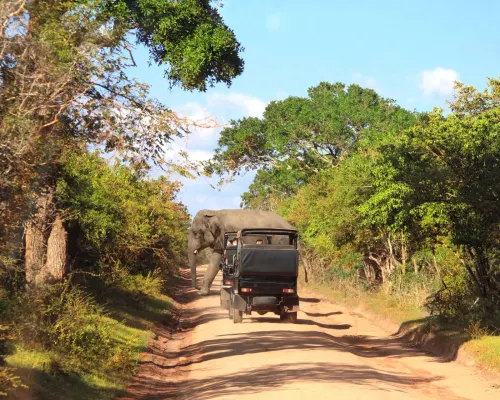
The jeep leaves around 5.30am to be at the Block I gate as it opens at 6am. Block I has the highest recorded density of wild leopards of any protected area, and early morning is when they are still out on the tracks rather than lying up. Elephants, sloth bears, crocodiles and around 215 bird species make up the rest of it. You are out by mid-morning, back for a late breakfast, and on the road west by midday, reaching Mirissa in the mid-afternoon with the rest of the day on the beach.
- Jeep departs around 5.30am for the 6am gate opening
- Morning game drive in Yala Block I
- Late breakfast, then drive west to Mirissa
- Afternoon on the beach

Day 13
Mirissa
Mirissa
Local driving only
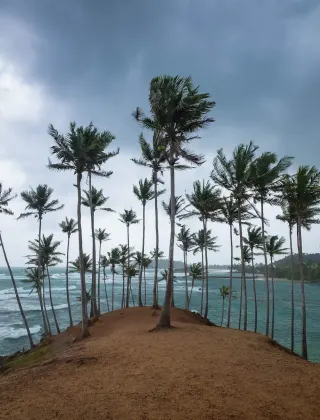
Whale-watching boats leave Mirissa harbour at about 6.30am between roughly November and April. Blue whales feed off the continental shelf here year after year, and sperm whales and spinner dolphins turn up on the same trips. It runs three to five hours and nothing at sea is guaranteed, so treat a sighting as the likely outcome and not a promise. Back on land, Coconut Tree Hill is a ten-minute walk from the east end of the beach and Parrot Rock is climbable at low tide. The rest of the day is yours.
- Optional 6.30am whale-watching boat, November to April
- Coconut Tree Hill
- Parrot Rock at low tide
- Free afternoon and evening
Day 14
Galle Fort
Mirissa to Galle
36 km, about 1 hour
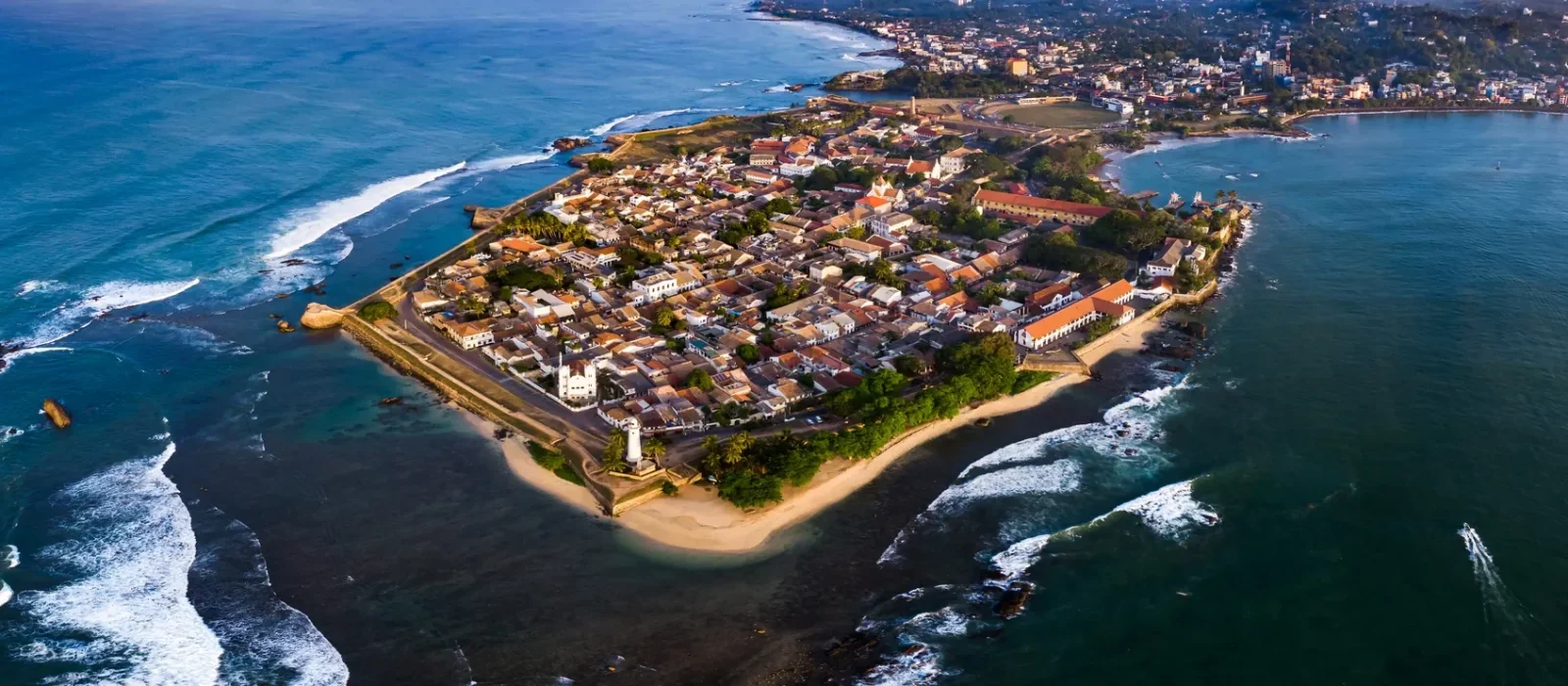
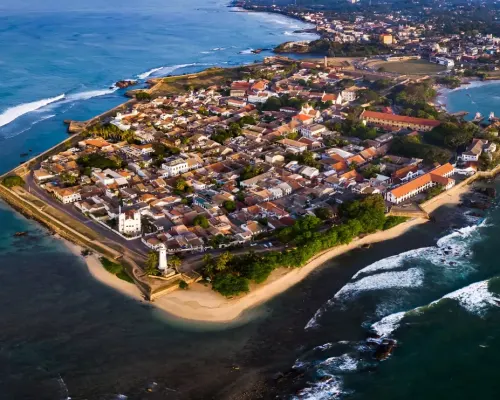
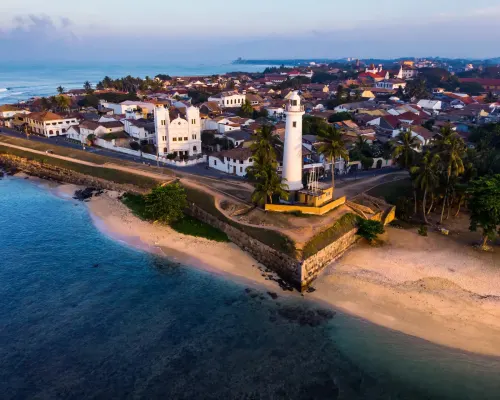
A short coastal run to finish on. Galle Fort is a 36-hectare walled town the Portuguese began in 1588 and the Dutch rebuilt from 1663, and it is still lived in rather than preserved as a museum, which is what makes it worth a night instead of an hour. Those walls are also why it came through the 2004 tsunami largely intact. See it on foot and see it late: the ramparts between the lighthouse and Flag Rock face the sunset, and the streets inside empty out once the day-trippers have gone.
- Short coastal drive to Galle
- Galle Fort on foot
- Sunset on the ramparts between the lighthouse and Flag Rock
Day 15
Departure
Galle to Bandaranaike Airport
162 km, about 2 hours 45 minutes on the Southern Expressway
The Southern Expressway makes the last day straightforward: 162 km and about two and three quarter hours door to door, with no town traffic until the airport interchange. Allow that plus three hours ahead of an international departure. If your flight is late in the evening, we can arrange a late checkout or a day room near the airport rather than have you sit in the terminal.
- Morning at leisure in Galle Fort
- Transfer to the airport via the Southern Expressway
What your quote covers
Always included
- Airport Transfers
- Intercity Transfers
- Comfortable Vehicle with A/C
- English-speaking Local Guide
- Nanu Oya to Ella train tickets
- Wildlife Safari
- Tea Plantation Visit
- Hiking/Trekking
- Bottled Water
- First-Aid Kit
- Luggage Handling
- Fuel and Government Taxes
- Highway Toll Fees & Parking Fees
Arranged on request, built into your quote
Hotels, meals, entrance tickets and extras are arranged to your preference and included in one clear quote.
- Hotel/Resort Accommodation
- Selected Meals (BB/HB/FB)
- Cultural/Historical Site Entrance Fees
- Yala National Park entry and jeep hire
- Horton Plains entry, if you take the optional morning
- Mirissa whale-watching boat ticket
Recommended Vehicles


Related Reading
Ella: The Instagram-Perfect Hill Station
A practical guide to Ella: the Nine Arch Bridge, hiking Little Adam's Peak and Ella Rock, Ravana Falls, the Demodara Loop train experience, and everything you need to plan your visit.
Anuradhapura: Walking Through Sri Lanka's Ancient Capital
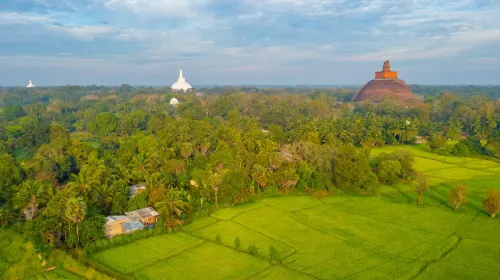
A practical guide to visiting Anuradhapura: the Sri Maha Bodhi tree, the great stupas, the bicycle route through the ruins, entry details, and what to know about this 2,400-year-old city.
Sri Lanka Travel Itineraries: 7, 10, and 14-Day Routes
Day-by-day itineraries for 7, 10, and 14 days in Sri Lanka, covering the Cultural Triangle, hill country, wildlife safaris, and south coast beaches with realistic travel times.
Plan this trip around you
Tell us your dates and interests. A real person replies within hours.
- No online payment, your plan is confirmed first
- Replies within hours on WhatsApp
- Private vehicle, driver and guide included
Before you book
This is the longest trip in the catalogue and the only one that covers all four of Sri Lanka's main draws in a single unbroken line: the Cultural Triangle, the hill country, a big-game safari, and the south coast. It is built for December to March, when the hill country and the dry zone are at their driest and the south-west coast is in its own dry season, so there is no point in the trip where half of it is in the wrong monsoon.
The pacing is the part worth reading twice. Nine bases in fifteen days sounds relentless, but the route is ordered so that the longest transfer falls on day two and nothing after it runs over two and three quarter hours. Day two, Negombo to Anuradhapura at 174 km, is the only transfer over three hours, and it lands early while you are still on the wrong time zone anyway. Sigiriya, Kandy, Nuwara Eliya, Ella and Mirissa all get two nights.
Pack for both climates. Nuwara Eliya sits at 1,868 m and evenings there run about 10 to 14 °C with no heating in most hotels; the coast and the dry zone stay hot and humid all year. Entrance fees are the other thing to budget separately: across fifteen days you will pay into Anuradhapura, Polonnaruwa, Sigiriya, Dambulla, the Temple of the Sacred Tooth Relic, Peradeniya gardens, Horton Plains if you go, and Yala, and together they are a real line item rather than a rounding error.
Two things on this route are weather- and season-dependent and we will not pretend otherwise. Whale watching from Mirissa runs roughly November to April and sightings are likely rather than certain. World's End at Horton Plains clouds over most mornings by about 9am, which is why the optional start is 5am.
Good to know
Nine bases in fifteen days. Is that too much moving?
It is the honest tension in any full-island trip, so here is the arithmetic. Total driving is about 900 km. The longest single transfer is 3 hours 30 minutes on day two; every other road day is under 2 hours 45 minutes. Five of the nine bases get two nights. If that still sounds like too much, the usual fix is to drop Anuradhapura and Negombo and add those nights to Kandy and Mirissa, which turns it into a calmer 15 days over seven bases.
Why does this route avoid the east coast?
Because the east coast and the south-west coast are on opposite monsoons. Trincomalee and Pasikudah are at their best from May to September; Mirissa and Galle are at their best from December to March. A loop that takes in both means one of them is in the wrong season whenever you travel. This trip commits to the south-west and to December to March. If you want the east coast, ask about the summer version of the circuit instead.
What is the best time of year for it?
December to March. That window covers the driest weather in the hill country and the Cultural Triangle, the south-west coast's dry season, and the Mirissa whale-watching period, which runs roughly November to April. The route works in November and April at the edges, with a higher chance of afternoon rain in the hills.
Is the Ella train ride included, and what if seats sell out?
Yes, the Nanu Oya to Ella leg on day nine is part of the plan and your driver carries the luggage by road so you travel light. Reserved first- and second-class seats are released about 30 days ahead and sell out quickly in season. If nothing is left we book unreserved second class, which is standing or shared seating but has the open doors people actually want. If you would rather not risk it, we drive the 56 km instead and nothing else in the day changes.
Do we need a 4x4 for the whole trip?
No. A standard air-conditioned vehicle covers the entire route, including the roads into Tissamaharama. Only the game drive inside Yala uses a dedicated safari jeep, and that is arranged locally on the morning.
Will we definitely see a leopard at Yala, and whales at Mirissa?
No, and anyone who says yes is selling you something. Yala Block I has the highest recorded wild leopard density of any protected area and a dawn drive in the dry season gives you a good chance, not a guarantee. Mirissa's blue whales are reliable enough that operators run daily in season, but sea conditions and luck both matter. We schedule both for the time of day and the time of year that give the best odds, which is all anyone can honestly do.
Can we extend the trip or slow it down?
Yes. Every itinerary is a starting point: add nights in any city, swap hotels, or slow the pace. Tell us in your enquiry and we shape the route around your dates.
Plan Your Trip
Tell us your dates and interests. A real person replies within hours.